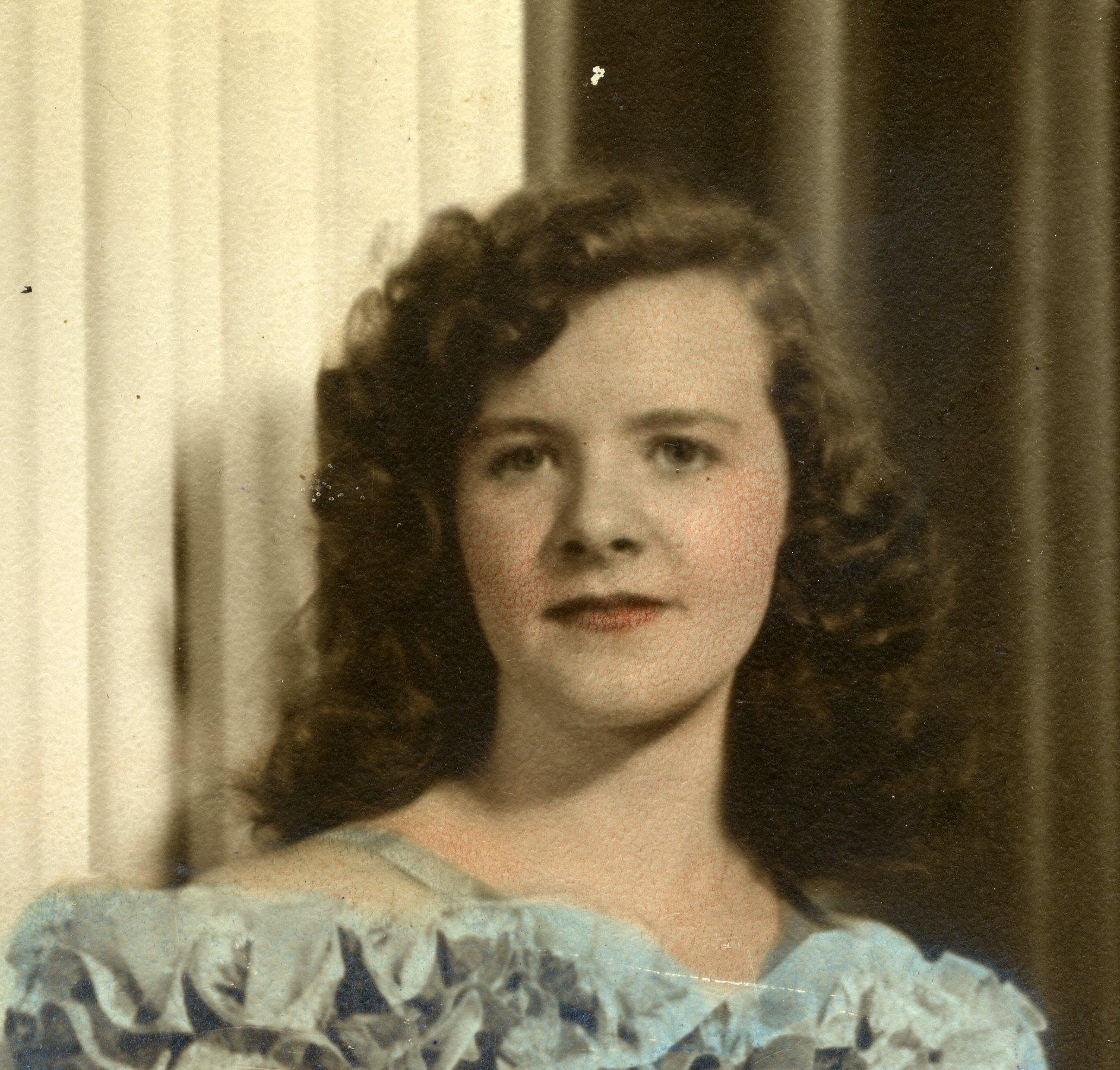
Small Houses, Big Families

Though she didn’t know it at the time, Alzada’s adolescence prepared her for her future role as the mother of a big family in a small house.

When Alzada was growing up there were only two beds in their small Fall River home at 733 New Boston Road – one bed her older brothers shared, and the other she shared with her parents.

Alzada’s father Louis passed away in 1944 when Alzada was 17, and soon after, Alzada’s brother Frank married her best friend Betty and moved back into the Weaver family home, where they had two daughters, Susan Irene and Cynthia Ann, by the end of 1950. Alzada’s brother Joe also moved in with his wife Johanna and their little daughter Joan in the late 1940s, and their son Robert was born while they lived there.

This was not a big house, so the living room was converted into a bedroom for Frank and Betty; Joe and Johanna took one of the bedrooms; and Alzada, who never slept alone, continued sharing the other bedroom with her mother Susan. Joe and his family lived there until Frank officially bought the Weaver home in the early 1950s.

Three days before their wedding in February 1950, Alzada and Irving rented an apartment on the third floor of a house on Durfee Street. There were times early in their marriage when they would put two weeks’ rent down on an apartment with no idea where they’d get the next two weeks’ rent, but Alzada and Irving never felt deprived because there was so much joy in their house from the beginning, so much activity and laughter.

Alzada was pregnant and quickly grew tired of climbing three flights of stairs, so they moved in with Irving’s parents, where their very first child, Steven Thomas Cross, was born in October 1950.

Irving, an electrician by trade, had to go where the work was, so their small but growing family moved around a lot in the beginning. He was on a job in Connecticut when their second child – me – Deborah Ann Cross – was born in January of 1952. We moved in with Alzada’s mother, Susan, our Nana, while Irving found us a place to live in Connecticut, and almost as soon as the job ended and we’d moved back to Fall River, Irving found his next job – in New Jersey.

“And I moved to New Jersey with the two babies!” Alzada said. “I felt like, where he goes, I go. Wherever his work takes him, then that’s where I’ll be.”

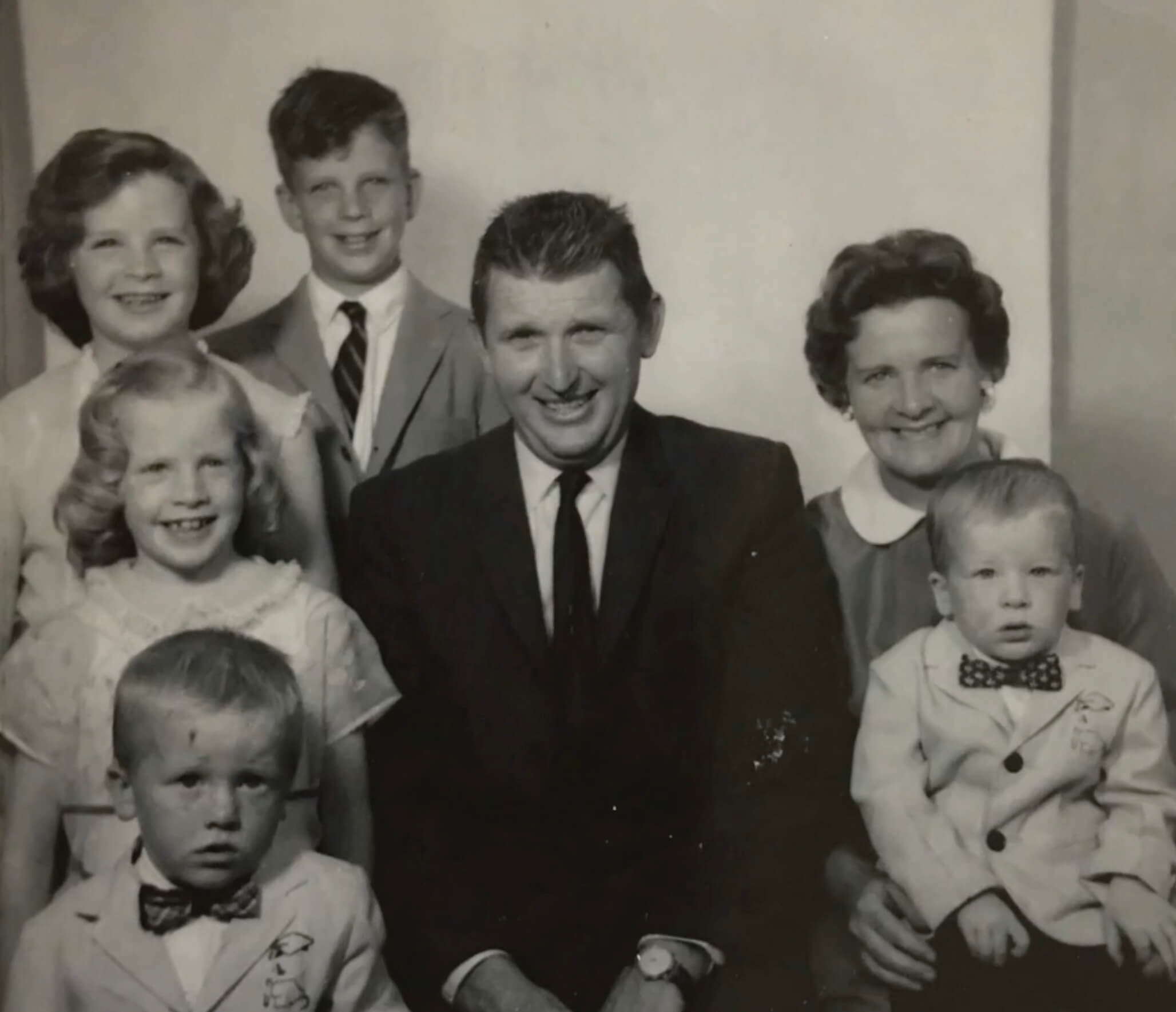
Alzada and Irving’s third child, Pamela Jean Cross, was born in July 1954, and their fourth, David Alan Cross, in October 1958.

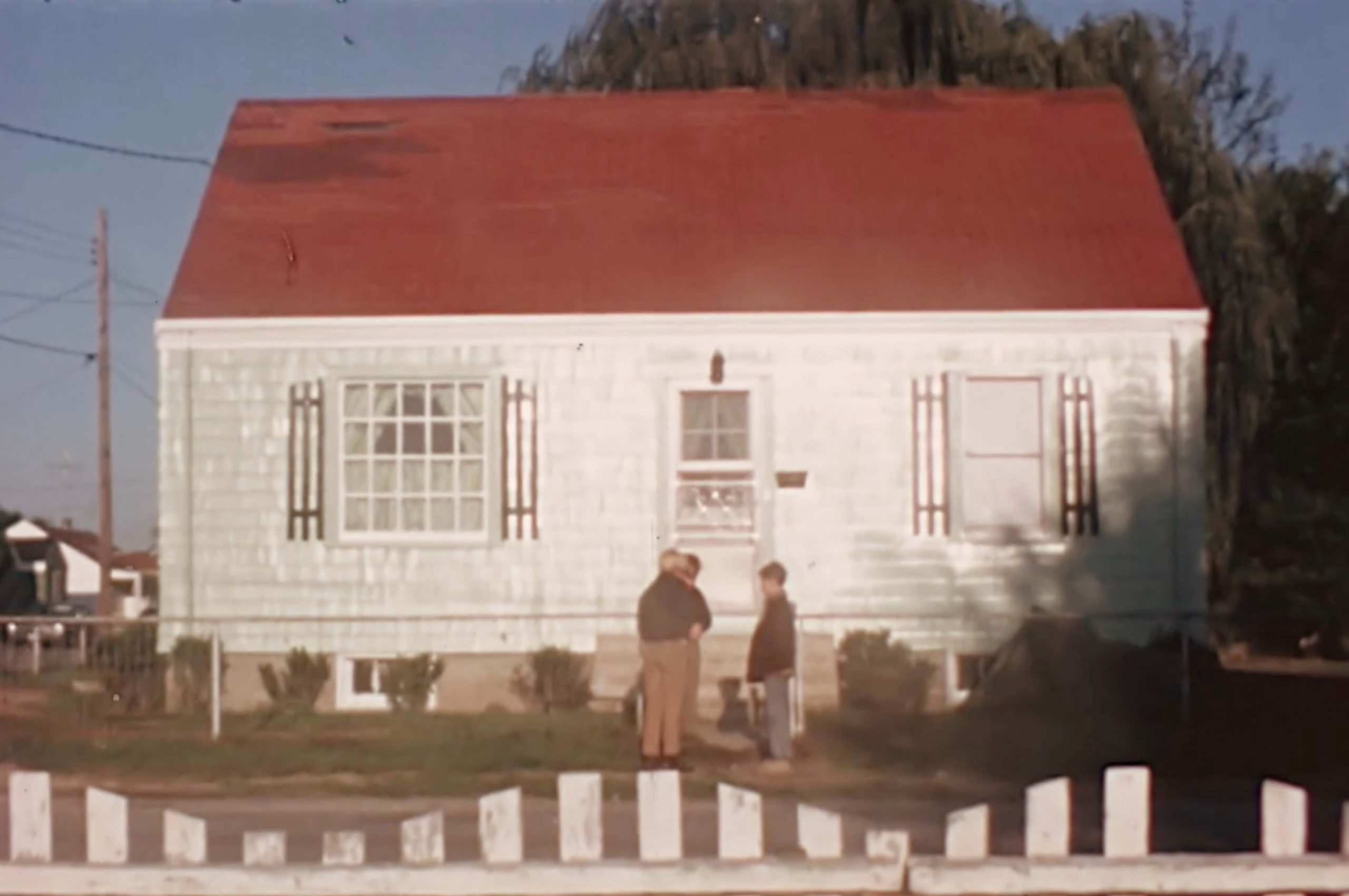
When David was one, Irving and Alzada purchased what would become the Cross Family “forever home” on Little Neck Island in Swansea, Massachusetts. Their fifth child, Brian Jay Cross, arrived in 1960, followed by their sixth and last child, Dana Bradford Cross, in October 1962.

“We had six kids and only one bathroom! I never pushed Irving that we needed a bigger house. We stayed in the house that we could afford,” Alzada said. “It’s a small house, but to us, it didn’t feel small.”

Alzada still lives in the Cross Family home.
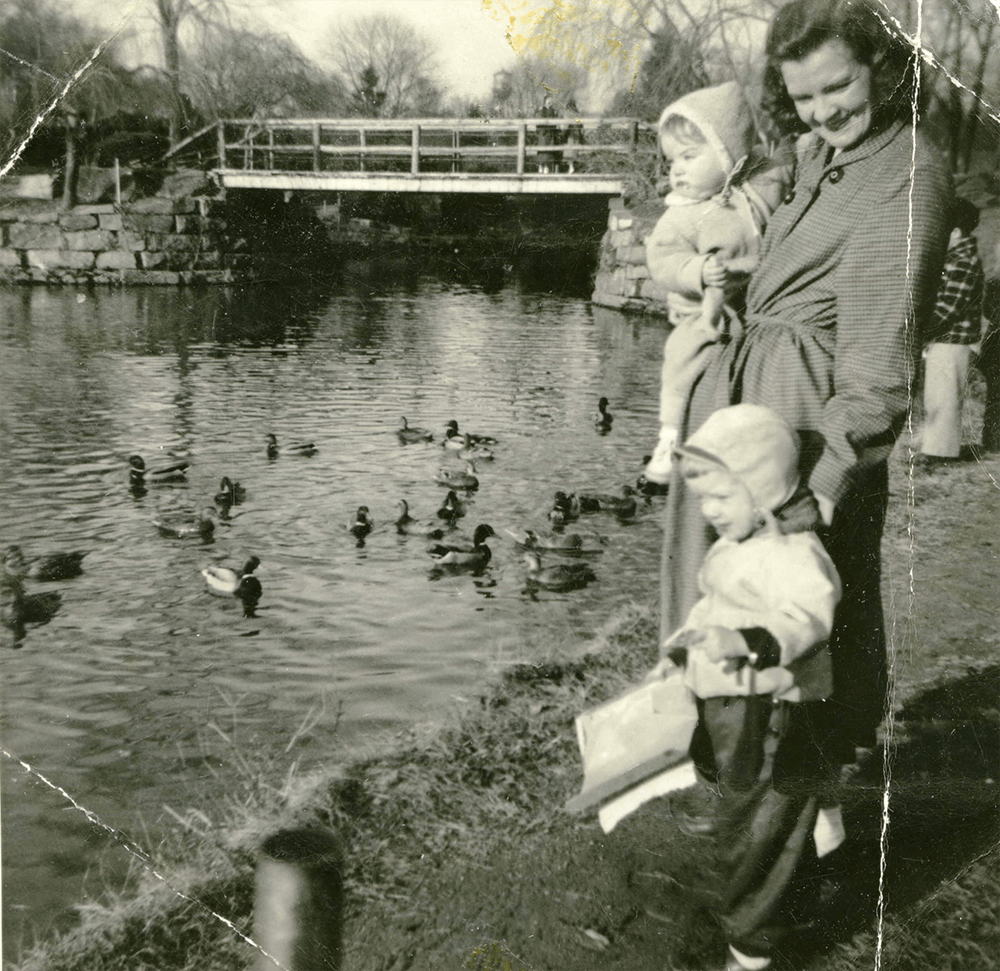
You Can Call Me Albatross

My mother, Alzada Estes Weaver Cross, daughter of Susan Gifford Weaver, was born in 1926, 55 years after the birth of her namesake, her grandmother (my great-grandmother), Alzada Estes Gifford.

Sadly, the two Alzadas never met. Grandmother Alzada died at age 51 in 1922, four years before my mother Alzada was born. I wish my grandmother Susan, whom I called Nana, had told me stories about her mother, Alzada, but I don’t have a single memory.

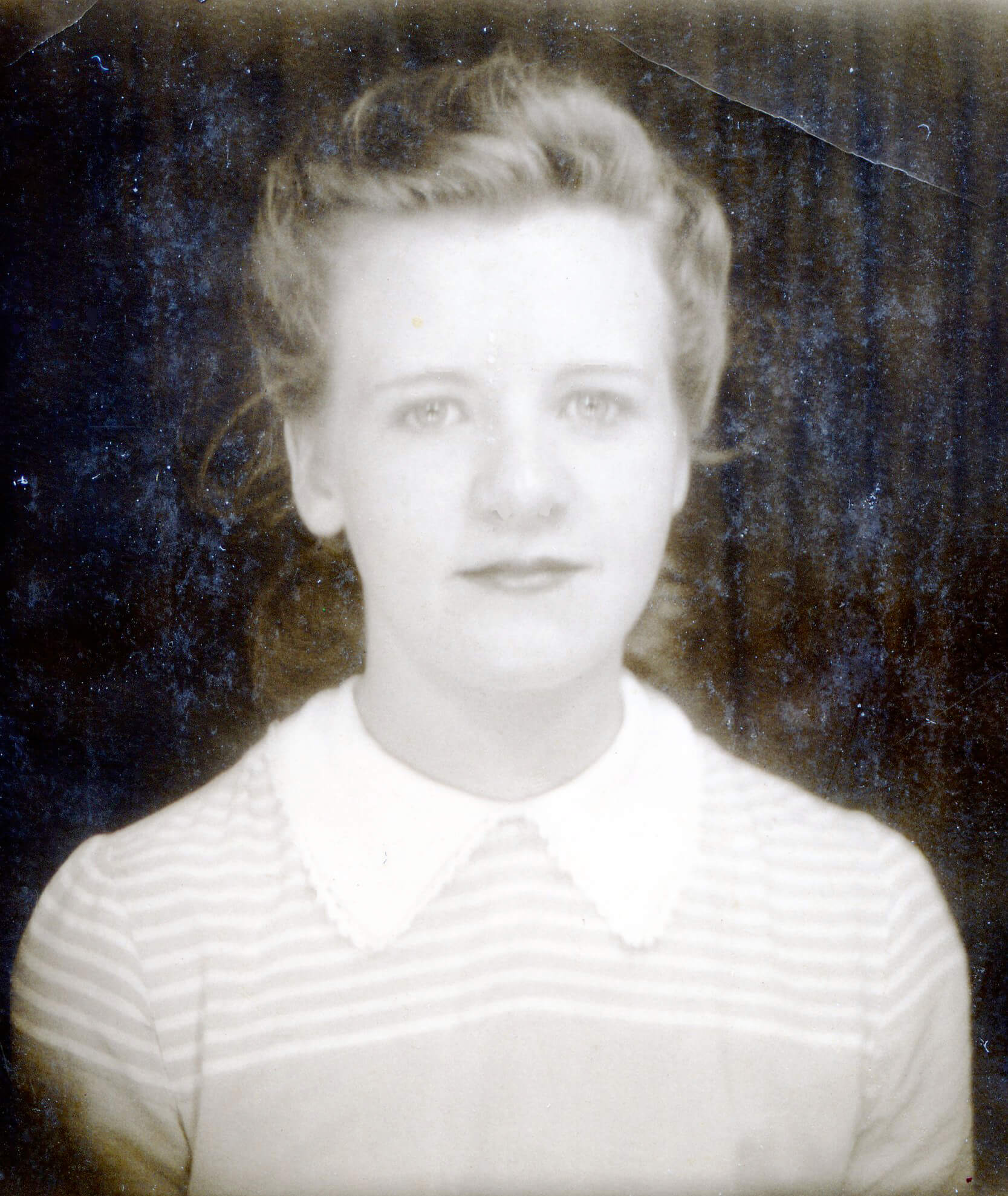
Growing up, Alzada regularly visited the cemetery with Nana to pay her solemn respects at Grandmother Alzada’s gravesite, and she often saw her grandmother’s beautiful, subtly-smiling face in the one treasured photo that exists – and yet, there was no denying that my mom, Alzada Estes Weaver, positively HATED her first name.

But, what does it mean, exactly? Because of the name’s rarity, I couldn’t find a reliable source of its meaning, and the U.S. Social Security Administration recorded only 337 babies named Alzada during the 135 years between 1880 and 2015.

In Spanish, alzada (pronounced all-ZAH-dah) is the feminine form of the adjective alzado, meaning “height” and “elevated,” respectively, and relating to the Spanish verb alzar which, at its simplest, means “to raise.”

However, if we explore various interpretations and translations, the verb alzar could also mean, both physically and figuratively – to lift or raise oneself up, to raise or increase the volume of one’s voice, or to rise against something – to revolt or rebel.

Naturally, teenage Alzada “rose” to the challenge.

Any woman who doesn’t like her given name will understand how my mother felt about hers, and as a teenager and young adult, Alzada was especially sensitive. While attending Durfee High School on Elsbree Street in Fall River, she would cringe with embarrassment upon hearing her unusual name ring out over the auditorium every day during morning roll call.

So, she nicknamed herself “Al” and went by that name exclusively among her friends; even her high school yearbook photo is captioned “Al.”

Al’s mom, Susan, sharply disapproved and would bristle at the sound of that boyish nickname. Susan, who had dearly loved her mother Alzada, was disappointed and saddened by her daughter’s rejection of the name, but as all parents know, they can’t make their children feel just the way they want them to — not now, and not back then.

One might assume that Alzada “the second” finally accepted her name as she got older, preferring a more mature moniker as she transitioned into adulthood, but Mom says it wasn’t until my second child, Rebekah Alzada, was born in Fall River, that she finally came to love her beautiful, unconventional name.

Over the years, Mom eventually collected other nicknames, too – like “Big Al.” Another nickname comes from her and Dad’s shared love of ham radio. For amateur radio operators, the term “handle” means an operator’s name, and Mom’s handle was “Albatross.”

Mom doesn’t think it’s especially flattering to be named after this big overbearing bird, but I think the nickname suits her quite well. The albatross has an extraordinarily long lifespan, and the largest (11-foot) wingspan of any living bird; formidable wings with which they effortlessly glide on ocean winds for hours at a time without ever flapping – or resting.

And, just like Mom and Dad, albatrosses mate for life and breed every two years – 1950, 1952, 1954, 1958, 1960, and 1962, skipping only 1956.

The English poet Samuel Taylor Coleridge cited the albatross as a good omen in his epic poem “The Rime of the Ancient Mariner” (1834), in which the sight of an albatross through the blinding fog was a sign of good luck, protecting and accompanying ships and mates for days at sea, in glorious as well as tempestuous weather. Under Mom’s enormous, unflappable, inexhaustible, protective wingspan, each of her six children has always been nurtured with warmth, love, and wisdom, and we’re all so fortunate to have blossomed under her generous wings.

Perhaps alzar can also mean “to soar.”


Music Video for "You Can Call Me Al" by Paul Simon

Lipstick

My Nana, Susan, was a strict and protective mother, and her only daughter Alzada was forbidden to date or wear makeup until long after her friends had begun to do so.

As a teenager in the mid 1940s, Alzada worked at the corner drug store behind the soda fountain, and ALL of the other girls wore lipstick back then.

But Alzada had to be sneaky, and she would put on her lipstick only after she had left the house.

Nana caught on one day when she arrived at the drugstore to escort Alzada home and discovered that her daughter was wearing bright-red lipstick.

“You wipe that right off,” she demanded angrily, but Alzada got up her courage and adamantly refused.

At home, Susan complained loudly to her oldest son, Alzada’s brother Frank, whose opinions she valued.

“Just look at her, your sister! She has makeup on her face!”

Frank caught his sister’s eye for one millisecond and then crowed to his mother, “Well, fine! It’s about time!”

And that was the end of that – Nana never again scolded Alzada for wearing makeup.

Banana Curls

As a little girl, Alzada was subjected to a daily hairdressing ordeal she grew to hate. Her mother, Susan, spent a lot of time fussing over Alzada’s hair, using her fingers to form the big, thick banana curls in style at the time for little girls. This ritual took place every single morning for years.

In a Sunday School nursery photo from First Baptist Church, Alzada, the only child with ringlets, is posed like a little China doll on a tiny wooden chair. (Susan volunteered every Sunday in the nursery, but did not attend the church service).

By seventh grade, her mother was still doing her hair in that childish style every morning. Gosh, she hated the curls by then. In her class photo from Morton Junior High School, Alzada is still the only one sporting perfectly coiffed coils – long banana curls in a sea of blunt bobs, pageboys, and bowl cuts. 

Susan kept Alzada in baby curls all through junior high, trying to keep her daughter from looking her age or – heaven forbid – older!

Alzada finally rebelled against the despised curls before she finished junior high, relieved when her Aunt Carrie cut her hair and gave her a permanent — an awful perm that turned out ugly, but never mind – Alzada much preferred her new grownup hairdo to those babyish banana curls.

Conflagration

My mother Alzada’s earliest and most vivid memory goes back to when she was just 18 months old.

On the record-freezing night of February 2, 1928, she huddled in her mother Susan’s arms in their Durfee Street home, gagging on thick smoke, crying in terror, as the Great Fire of Fall River ravaged the city.

The fire began in the Pocasset Mills and rapidly roared into a widespread inferno. Toxic fumes blanketed the city, and howling winds hampered all efforts.

In just eight hours the conflagration demolished five city blocks, leveled 36 buildings, and most of its businesses, including its five banks, three theatres, three hotels, two newspaper plants, the Post office, and twelve office buildings – all this at a time when the economy was already struggling. 

“I could feel my mother trembling,” Alzada said, recalling how she clung to her mother, while her older brothers, William (age 5) and Frank (age 10) stood close, fearful as they watched the disaster blazing around them.

What a traumatizing moment that must have been for a toddler, to palpably feel the terror of her mother as her whole world was engulfed in smoke and flames. I wonder if this early trauma in part influenced my mother’s intuitively protective nature.

Throughout our lives, all six of us Cross children have always had an inner knowing that we were protected from harm, and I will always be grateful for the safety and comfort she surrounded us with.