An Accidental Career

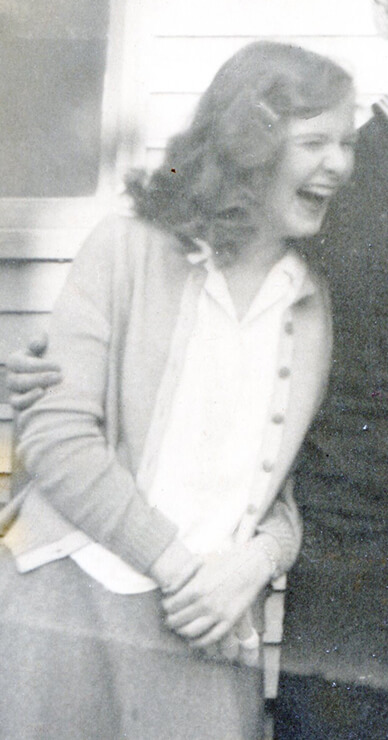
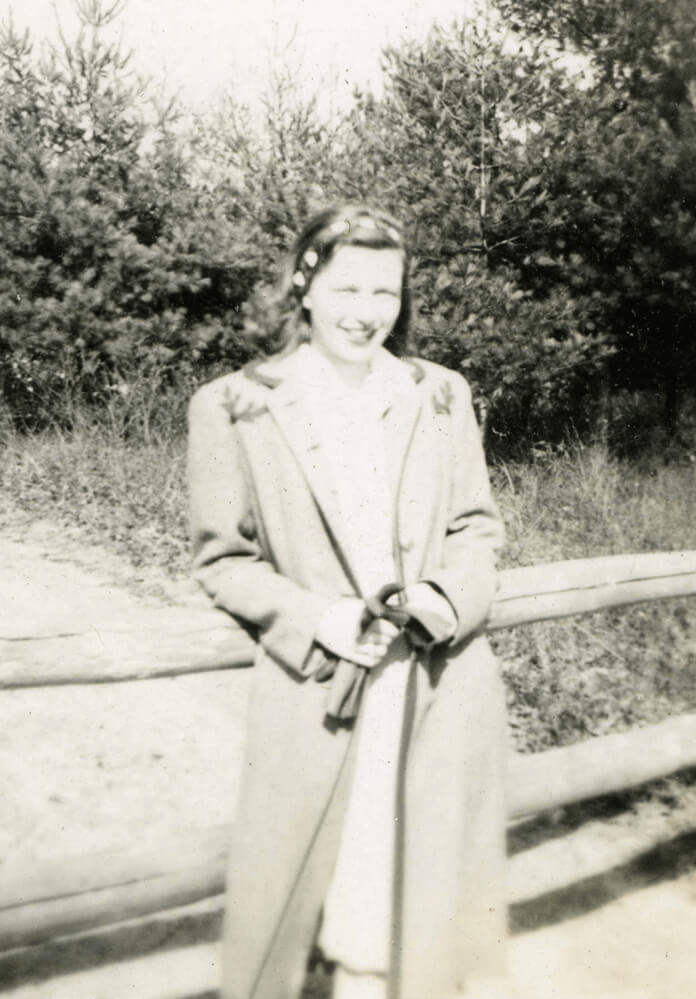
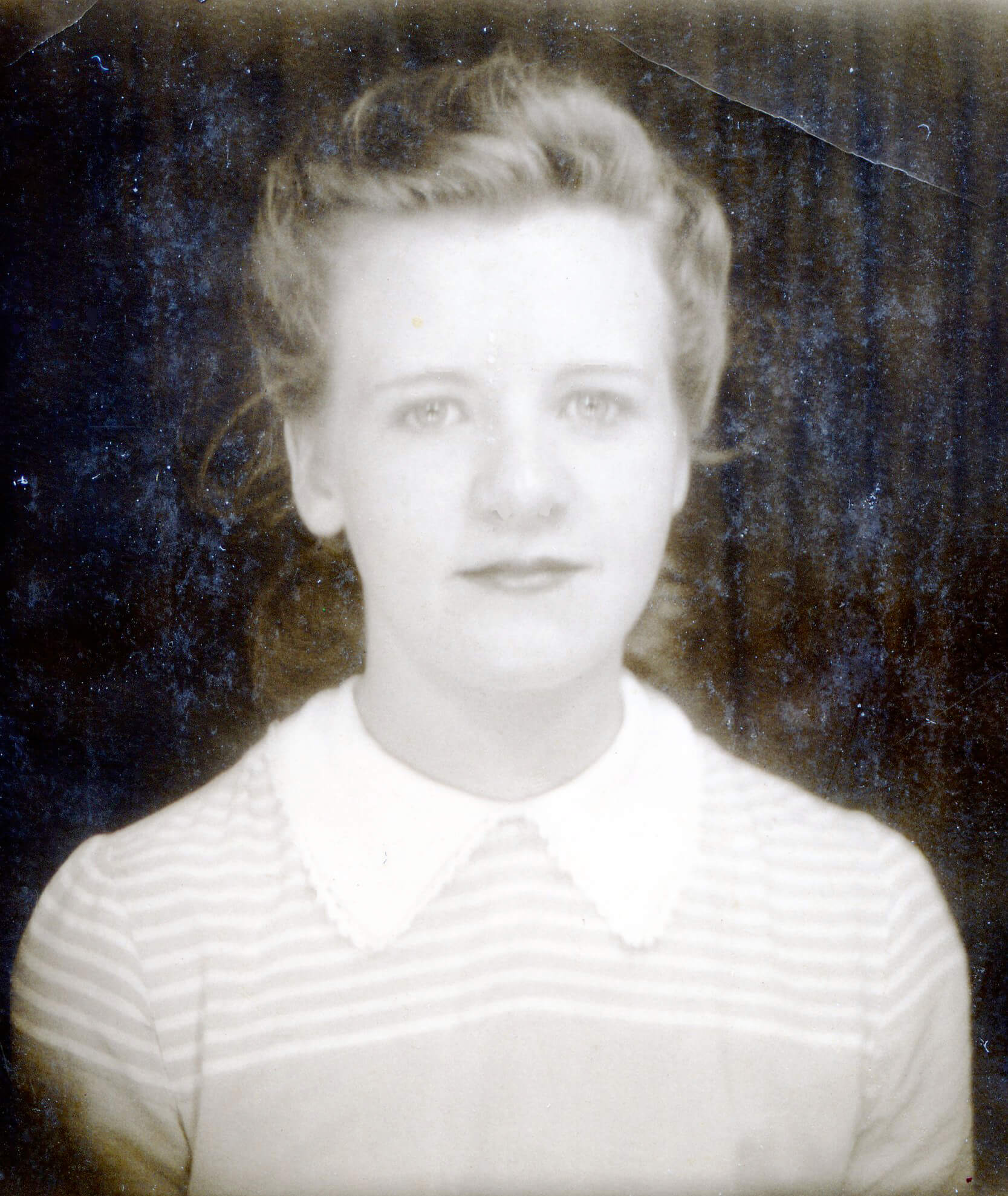
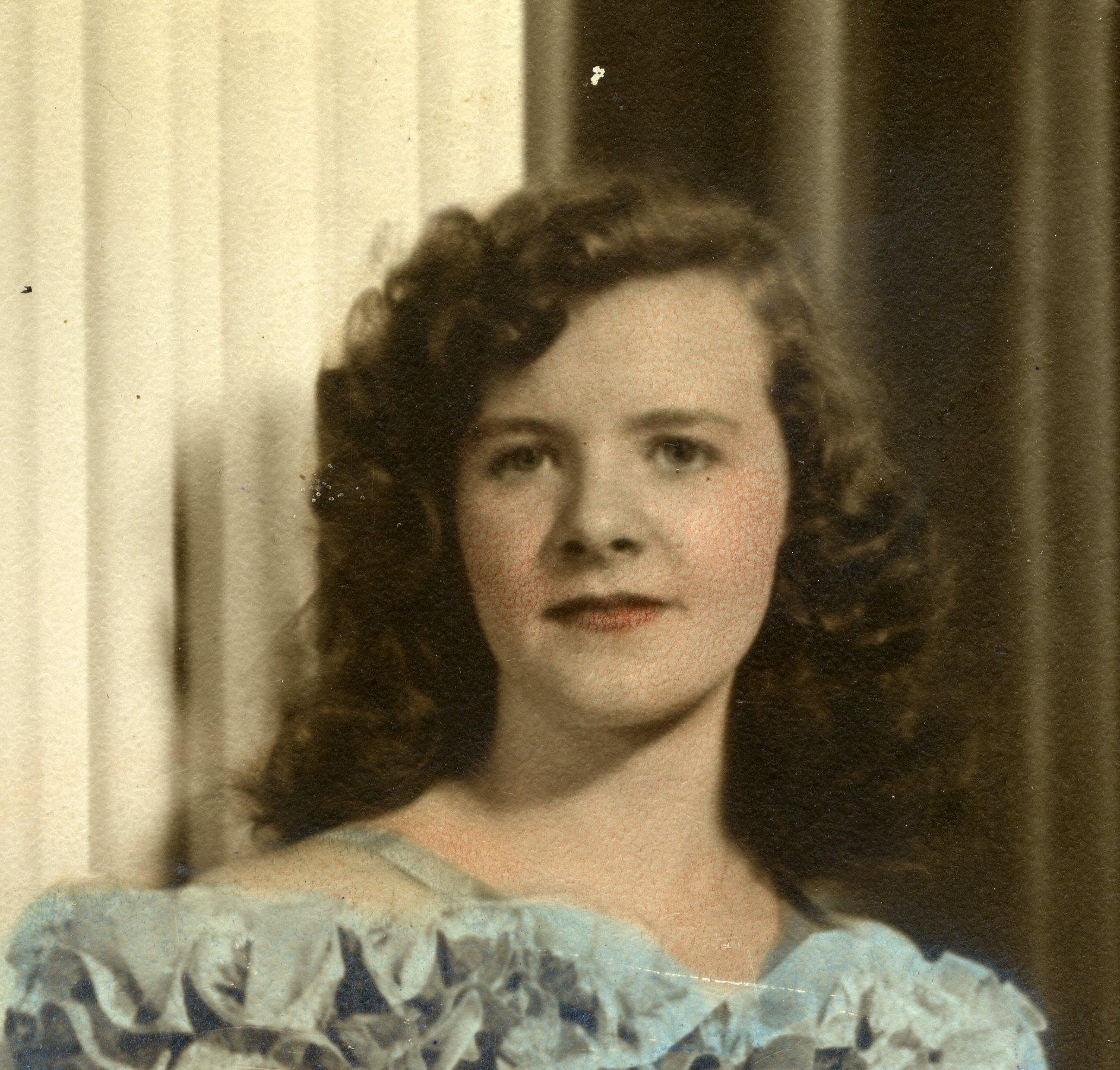
In 1944, aged 17 and newly graduated from Durfee High School, Alzada went to work at the Firestone Tire & Rubber Company, where she helped make gas tanks. Her schedule was rough – two weeks of day shifts followed by two weeks of night shifts –and she never got enough sleep but, somehow, she still managed an active social life (and plenty of dates).

Soon after, Alzada went to work at the real estate office of Pierre Ouelette, and just a few years later, she was working two jobs – as a sales clerk in the R.A. Wilcox stationery store and behind the soda fountain at the corner drugstore. It was in the drugstore, in 1949, at age 23, that Alzada met the man that would change her life — Irving Cecil Cross — my dad.

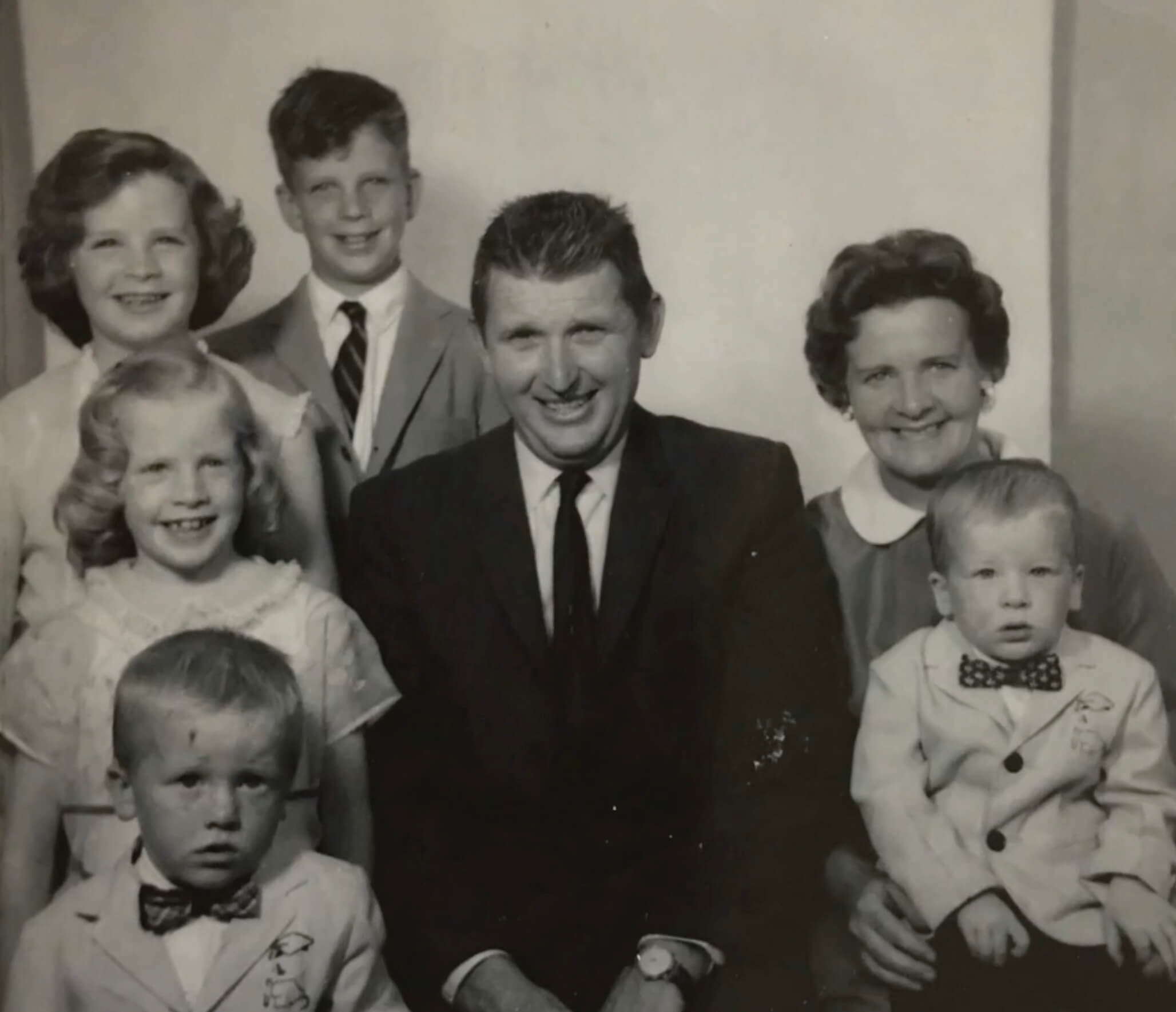
Alzada and Irving were married in 1950, and for almost 15 years, mom’s primary job was raising six kids.

Then, in 1964, nearly 40 years old, mom accidentally started a whole new career at Raytheon, an industrial military and commercial electronics manufacturer headquartered in Massachusetts.

“I had always talked about work,” Alzada said. “Irving worked as an electrician on construction, and he could go in one day and be laid off at any time if the job came to an end, and he could not afford to go on unemployment because we wouldn’t be able to survive with the kids.”

“I asked him if it would be helpful for me to work, [so that] if he got laid off, he could go on unemployment, and he always answered [with a] no. He didn’t want me to work.”

“But, when Dana was four years old, there was an ad in the paper, and I said – ‘Gee, Irving, can I go try to get this job? It’s working 4:30 to 11 at night. I would be with Brian and Dana all day and would be home early enough to be able to get up and take care of them the next day.’ – and he said OK.”

“He figured I wouldn’t get the job, that’s why he was so agreeable. But I went and I got the job and I worked there 20 years as a mechanical assembler.”

For 20 years my mom worked second shift so that she could watch the kids and keep up with housework during the day, and then prepare dinner for her hungry brood. I got to help her when I returned home from school in the afternoon, and then Dad would take over.

My mother said there were times early in their marriage when she and my father put two weeks’ rent down on an apartment with no idea where they would get the other two weeks’ rent. She marvels that even so, she never felt deprived because there was so much joy in our house from the beginning, so much activity and laughter.

My parents loved to be together, and my mother was amazed at what a great father and husband my dad was. Every day he was sure to tell mom how lucky she was to be married to him. He made her laugh, but it was true. They were both lucky.
Track Meets

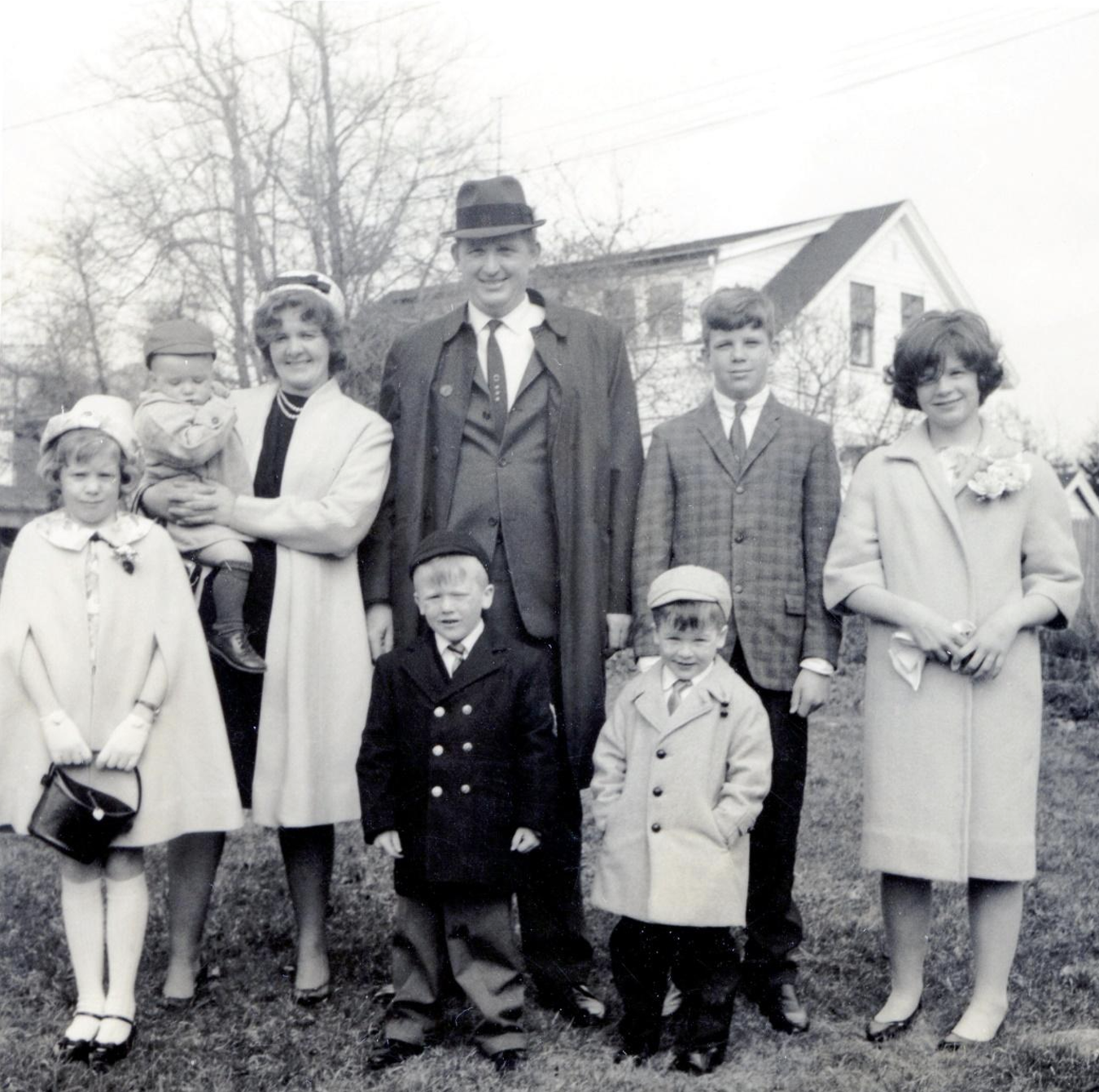
Irving would enter us Cross kids into track meets, even though we had no formal training whatsoever. What we did have in abundance was love and encouragement from both of our parents — and the chance to shine. Irving thought we would run fast and do fine out on the field, and so we did.

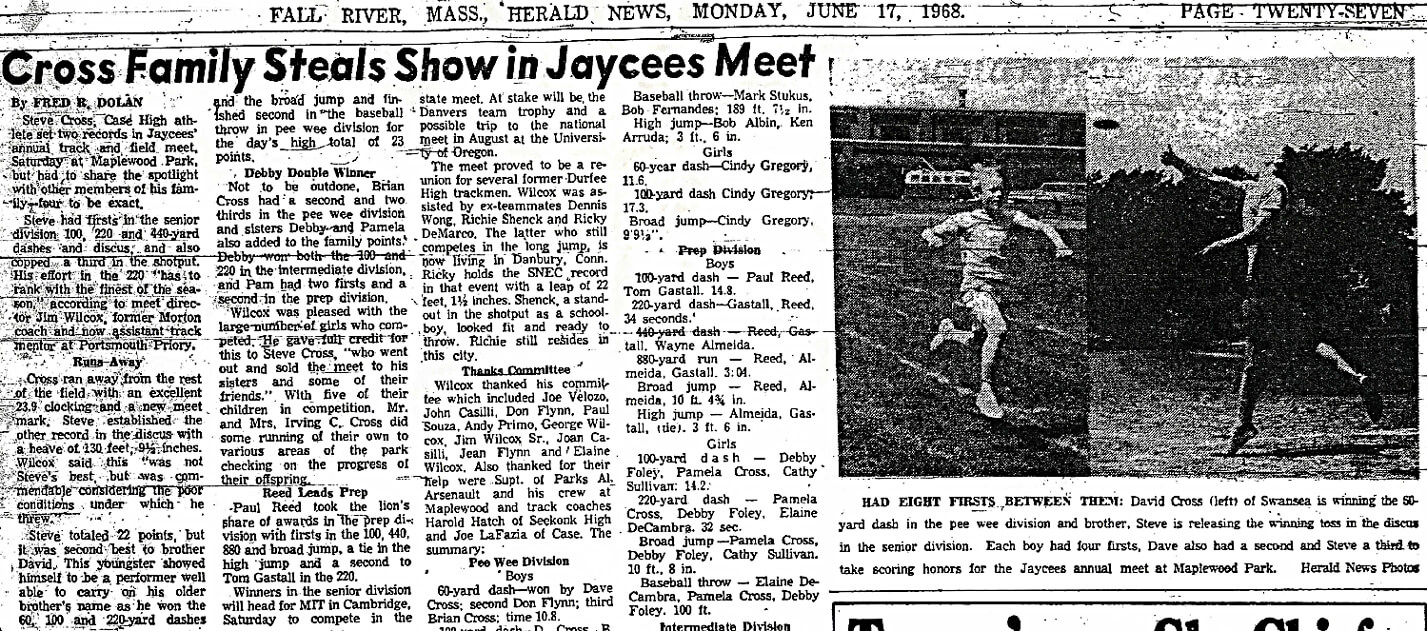
One of these track meets was triumphant for our family. On Saturday, June 15, 1968, Irving entered five of us in the Jaycees’ annual track-and-field meet at Maplewood Park in Fall River – everyone except Dana, who was too young at age six.
ALL FIVE OF US WON MEDALS!

Our family’s combined victories earned us an article in the Fall River Herald News on June 17, 1968 – “Cross Family Steals Show in Jaycees Meet,” read the headline.

Reporter Fred Dolan wrote that our oldest brother, Steve, broke records in both the 220-yard dash and the discus throw, two of the five events in which he competed. For all of the details, see the full article below (our trusty Volkswagen bus appears in the background of the newspaper photo).

Our brother David won three foot races AND the broad jump AND took second in the baseball throw, scoring the highest overall point total of any athlete who competed on that day.

AND that was not all – Brian won one second-place medal and two third-place medals; Pam won two firsts and one second in the prep division; and I, Deborah (“Debby”), came in first in both the 100-yard and 220-yard dashes in the intermediate division.

Mr. Dolan also gave our parents their share of spotlight – "Mr. and Mrs. Irving C. Cross did some running of their own to various areas of the park checking on the progress of their offspring."

Rope Tows & Rapids

Alzada was a reluctant but almost always willing victim. Consider the first – and LAST – time my mother attempted to ski.

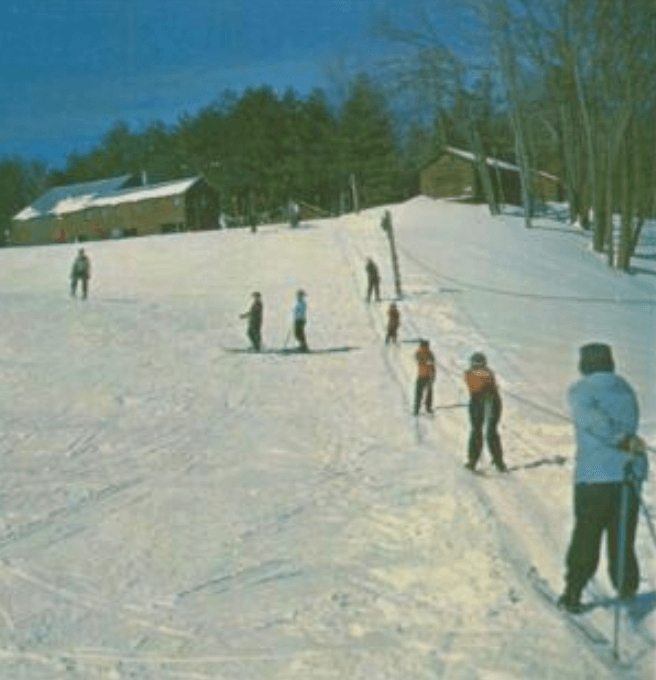
Mom had a knack for finding affordable places we could all go to in our Volkswagen Bus, including King Pine, a family-friendly ski house in Madison, NH. The cost for skiing was $4 a day in the 1960s, and the lodging rates and all-you-can-eat meals (a must with growing boys in the family) were quite reasonable. I still remember Steve eating enough bacon for a battalion every morning.

Dad and the kids were quite adept at ascending by the chairlift, but beginners would start on the "rope tow," a free, crude system of a looped rope powered by a motor. You grasp the rope to haul you up the slope.

All of us urged mom to give it a try – "C’mon mom, just try it,” was the family refrain.  

And she did.

Mom grabbed the rope tow tight, fighting the momentum, she was getting there…

And then, halfway up, her skis crossed and she ended up on her back with her arms and legs splayed at her sides, as if she were going to make a snow angel. Skiers behind her joined the fray.

And mom just couldn't get up.

I’d like to think I’m better than this, but at that moment, all I could do was laugh! (It still makes me laugh!) I tried to suppress it, but it was just so, so funny.

Mom didn't think so, and never skied again.

Years later, when us Cross kids were adults, we all went together on a whitewater rafting trip in Colorado. Mom, on the back of the raft, was totally unprepared for what was going to happen.

As soon as we hit the first rapids – out of the raft she tumbled, taking the guy sitting next to her along with her.

She had to drift down current in her lifejacket for at least a mile before she could swim to shore, boiling mad that not one of us, not even our father, had jumped out to help her (which would have been impossible at our breakneck speed).

Needless to say, mom also gave up whitewater rafting.


Motor-Sledding Alzada

Small Houses, Big Families

Though she didn’t know it at the time, Alzada’s adolescence prepared her for her future role as the mother of a big family in a small house.

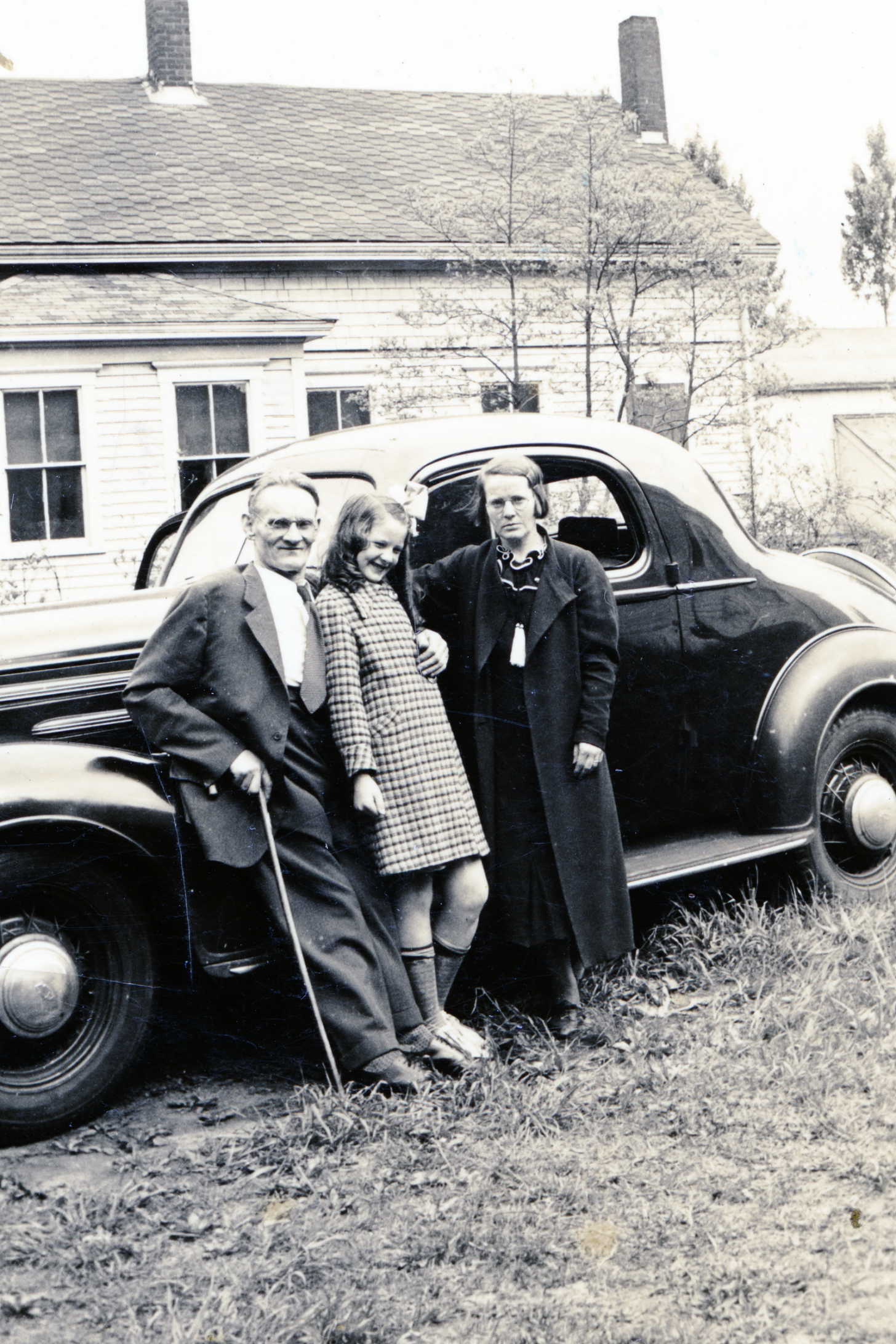
When Alzada was growing up there were only two beds in their small Fall River home at 733 New Boston Road – one bed her older brothers shared, and the other she shared with her parents.

Alzada’s father Louis passed away in 1944 when Alzada was 17, and soon after, Alzada’s brother Frank married her best friend Betty and moved back into the Weaver family home, where they had two daughters, Susan Irene and Cynthia Ann, by the end of 1950. Alzada’s brother Joe also moved in with his wife Johanna and their little daughter Joan in the late 1940s, and their son Robert was born while they lived there.

This was not a big house, so the living room was converted into a bedroom for Frank and Betty; Joe and Johanna took one of the bedrooms; and Alzada, who never slept alone, continued sharing the other bedroom with her mother Susan. Joe and his family lived there until Frank officially bought the Weaver home in the early 1950s.

Three days before their wedding in February 1950, Alzada and Irving rented an apartment on the third floor of a house on Durfee Street. There were times early in their marriage when they would put two weeks’ rent down on an apartment with no idea where they’d get the next two weeks’ rent, but Alzada and Irving never felt deprived because there was so much joy in their house from the beginning, so much activity and laughter.

Alzada was pregnant and quickly grew tired of climbing three flights of stairs, so they moved in with Irving’s parents, where their very first child, Steven Thomas Cross, was born in October 1950.

Irving, an electrician by trade, had to go where the work was, so their small but growing family moved around a lot in the beginning. He was on a job in Connecticut when their second child – me – Deborah Ann Cross – was born in January of 1952. We moved in with Alzada’s mother, Susan, our Nana, while Irving found us a place to live in Connecticut, and almost as soon as the job ended and we’d moved back to Fall River, Irving found his next job – in New Jersey.

“And I moved to New Jersey with the two babies!” Alzada said. “I felt like, where he goes, I go. Wherever his work takes him, then that’s where I’ll be.”

Alzada and Irving’s third child, Pamela Jean Cross, was born in July 1954, and their fourth, David Alan Cross, in October 1958.

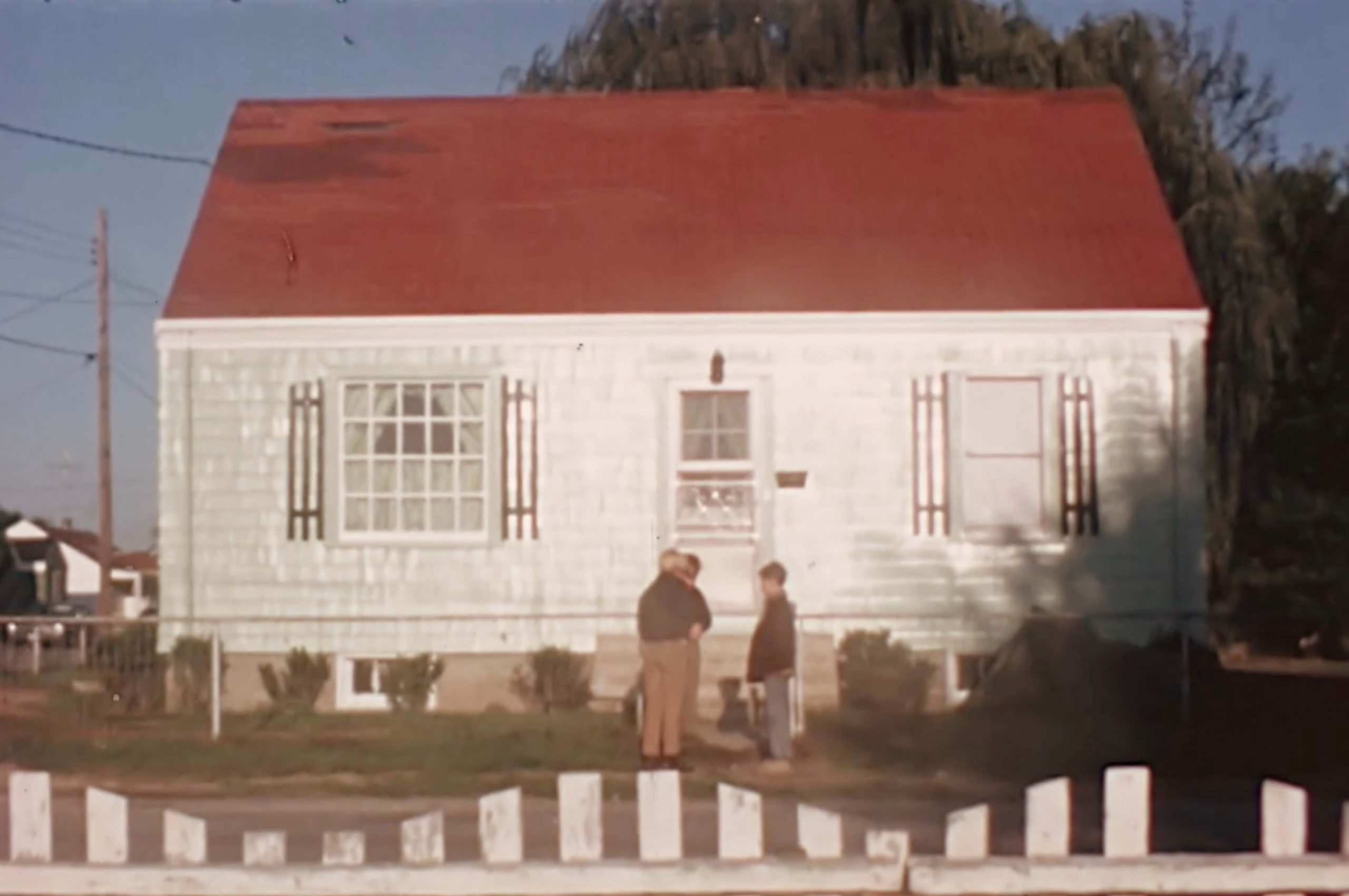
When David was one, Irving and Alzada purchased what would become the Cross Family “forever home” on Little Neck Island in Swansea, Massachusetts. Their fifth child, Brian Jay Cross, arrived in 1960, followed by their sixth and last child, Dana Bradford Cross, in October 1962.

“We had six kids and only one bathroom! I never pushed Irving that we needed a bigger house. We stayed in the house that we could afford,” Alzada said. “It’s a small house, but to us, it didn’t feel small.”

Alzada still lives in the Cross Family home.

Wedding Surprise

Once, when asked how Irving popped the question, Alzada (laughing) said, “I’m not sure he asked me – I think it just…happened.”

Irving and Alzada became Mr. and Mrs. Cross on Friday, February 17, 1950. It was a freezing cold day, but the temperature doesn’t matter when you’re so much in love, and you don’t need fancy proposals and expensive frills to get married.

Their small, simple wedding ceremony was held in the modest church parlor of the parish house. Alzada’s brother Frank was Irving’s best man, and Frank’s wife Betty (Alzada’s best friend and sister-in-law) was her matron of honor.

Within seconds of being officially pronounced man and wife, still standing hand in hand at the altar, Alzada’s overwhelming happiness vanished in a cloud of confusion and disbelief as Irving was wrenched away from her.

“It felt like there were people pulling our hands apart. Who would do such a thing to a newly married couple?” Alzada recalled. “And then I looked, and it was Irving – he had passed out!”

He was just about to fall on the floor when Frank, who was 5’2 – a whole foot shorter than 6’2 Irving – caught him. (Best man, indeed!)

The little wedding party got the woozy newlywed into a chair, and as he came to, Irving said, “OK, finish it.”

When they told him he was already married, he looked at his hand, saw the ring and, very calmly, simply said, “Oh.”

From swooning to honeymooning!

NOTABLE NUPTIALS

Sir David Attenborough, who was born in May of 1926, just five months before Alzada, also got married on February 17, 1950. He and his wife Jane Elizabeth Ebsworth Oriel were married until her passing in 1997. Other notable nuptials for February 17th include Teddy Roosevelt's daughter Alice (1906), novelist J.D. Salinger (1955), and actress Joan Collins (2002).

Alzada + Irving

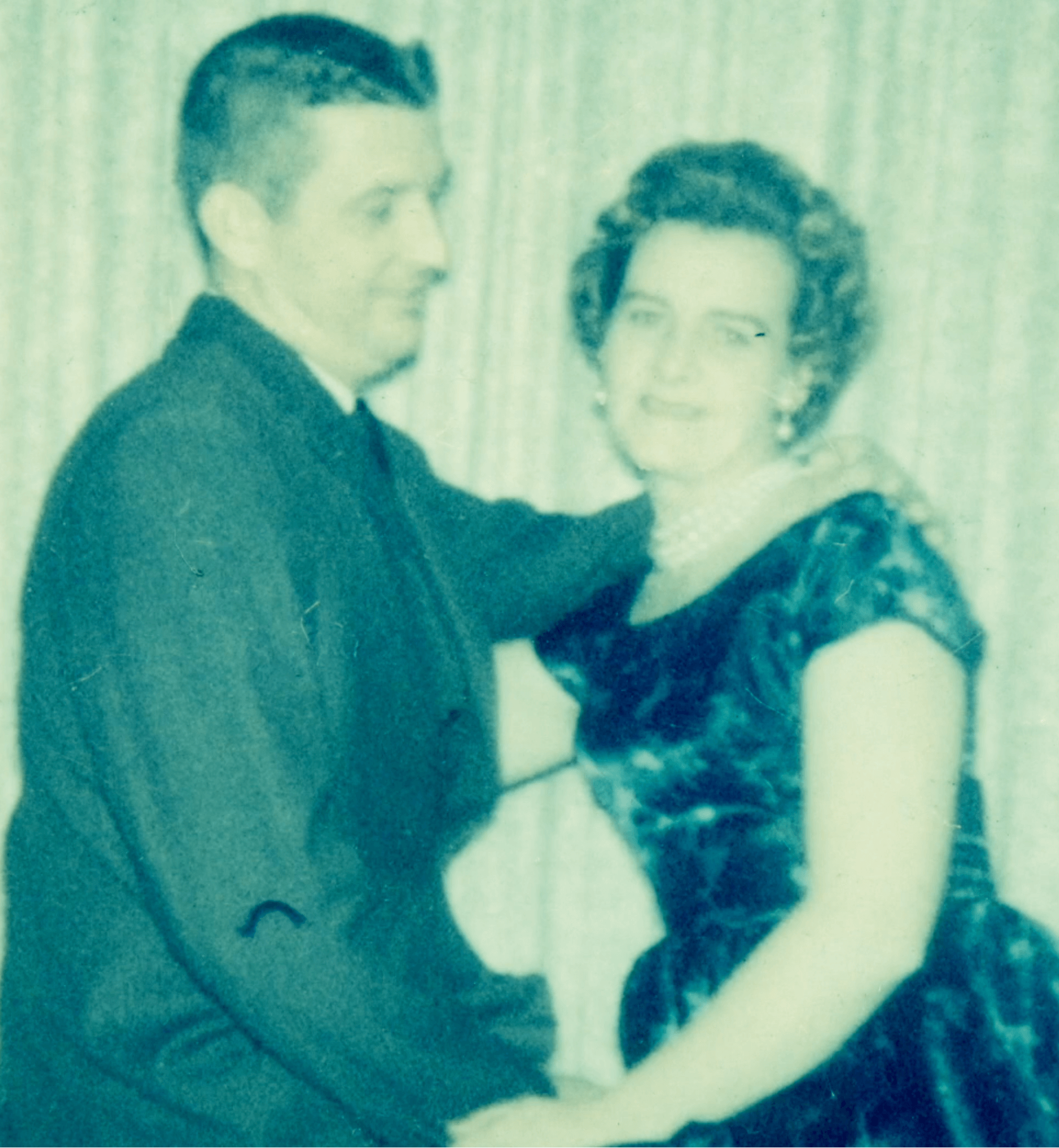
Alzada and Irving were attracted to each other at first sight.

It was 1949 and Alzada, age 23, was working the soda fountain at the corner drugstore in Fall River. From behind the counter, she could watch everyone who came into the store, and one day, a very attractive young man caught her eye.

He was tall, slim, and elegant-looking, and Alzada noticed right away that he had an appealing kind of hip action while playing pinball with his friends. Pinball gave him an appetite, and the pretty girl behind the counter – a classic beauty with an easy smile – was even sweeter than the sodas she served.

Alzada, instantly smitten, always gave him a little extra ice cream each time he came in, embellishing the recipe, concocting extra-special sodas just for him – pretending not to hear when he bragged to his friends that the fountain girl gave him drinks for free. (Alzada was paying for his ice cream sodas!)

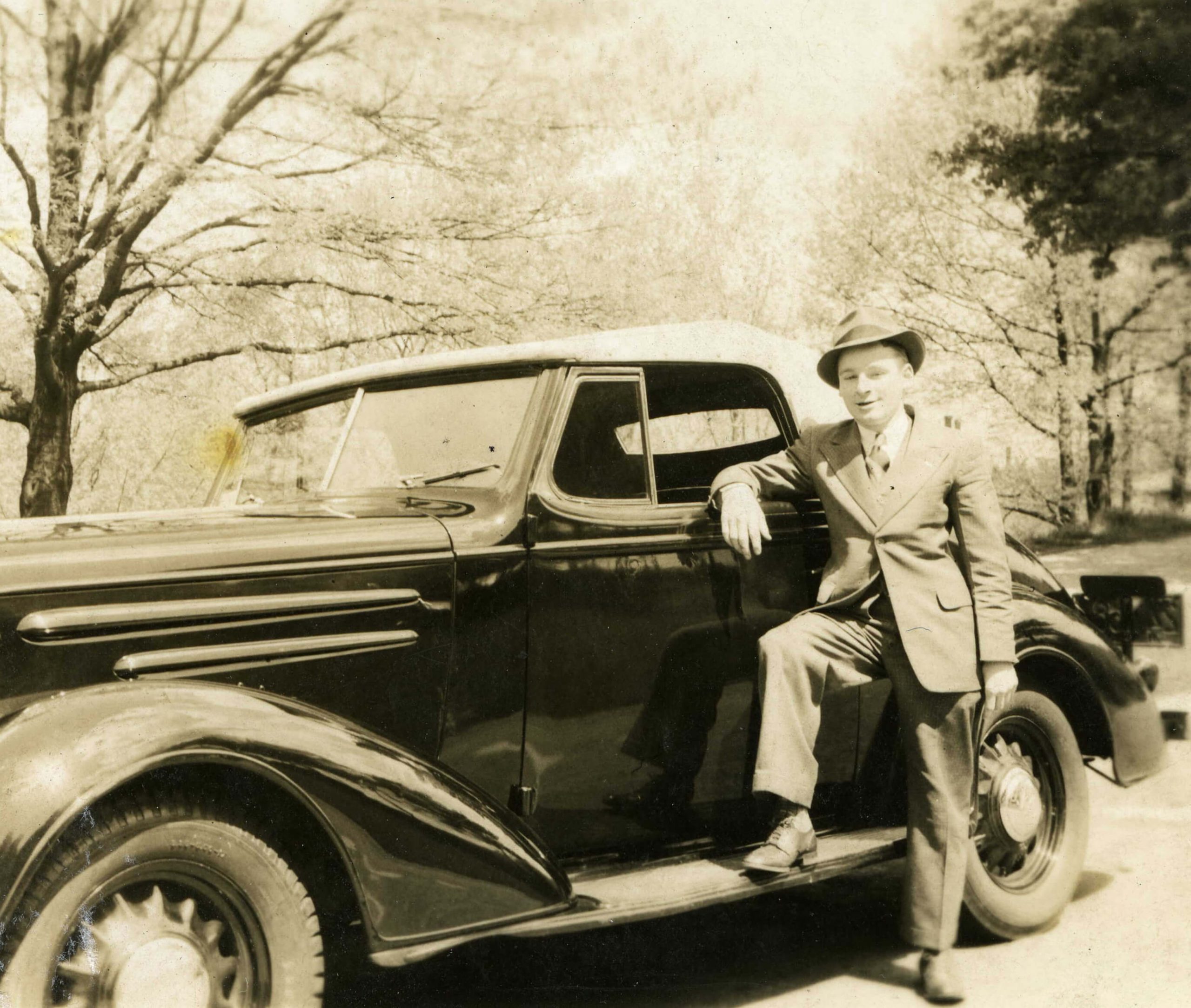
The handsome fella with the sweet tooth and swiveling hips was one Irving Cecil Cross, and he had a lot going for him: he was the youngest licensed electrician in town at age 22, and doing well by the looks of his brand new bright yellow 1949 Jeep Roadster.

Boy, is that something, Alzada said to herself.

But there was something more than just his good looks, sharp wit, and magnetic personality, and Alzada recognized it very early in their blossoming relationship; it was the essence of Irving’s generous and genuine spirit. If a friend needed money, Irving would lend it to him. He would even let friends borrow his precious car.

Irving picked up Alzada in his newly shined canary colored Jeepster for their first date. He wore a stylish, well-made suit and showcased his impeccable manners at the fancy restaurant he took her to. Their first date became the happiest day of both their lives at that point, with happier days yet to come.

She soon found out that the snappy suit was rented, and the Jeepster was repossessed soon after that, so Irving had to settle for a broken-down Ford truck and ten-cent beers when planning their dates. Expensive restaurants were no longer within their reach, but they never had been!

And none of that mattered. Alzada had fallen in love with a man who valued people more than possessions. She was always proud to be seen with Irving. He was the man she had always imagined falling in love with and she was the girl he’d always been looking for. They were made for each other.

It’s an enduring love story that gave rise to more love through their children, grandchildren, and great-grandchildren, and will continue through the generations yet to come.

Irving truly swept Alzada off her feet, and she never landed back on earth.

And they really, truly lived happily ever after.

Alzada's Best Friend Betty

Alzada's BFF Betty was born Barbara Elizabeth Wise on September 26, 1926 in Fall River.

Their friendship began at Durfee High School, from which they graduated in 1944, and by the end of the ‘40s, Betty would also become Alzada’s sister-in-law – and roommate!

However, if it weren’t for World War II, Betty might’ve married a different brother. You see, Betty first went on a few dates with Joe, the middle Weaver child, who then joined the service, and while he was gone, Betty and Frank, the eldest Weaver child, happened to fall in love.

Don’t worry about Joe, though – he married a Scottish girl named Johanna Kelly after the war.

Soon after Betty and Frank were married, they moved into the Weaver family home with Susan and Alzada (and at one point, Joe and Johanna, too!) – where both of their children were born – Susan Irene and Cynthia Ann.

At Alzada and Irving’s small church parlor wedding on February 17, 1950, Frank was Irving’s best man and Betty was Alzada’s maid of honor.

Betty and Alzada remained close friends until Betty passed away at age 55 in 1981.

You Can Call Me Albatross

My mother, Alzada Estes Weaver Cross, daughter of Susan Gifford Weaver, was born in 1926, 55 years after the birth of her namesake, her grandmother (my great-grandmother), Alzada Estes Gifford.

Sadly, the two Alzadas never met. Grandmother Alzada died at age 51 in 1922, four years before my mother Alzada was born. I wish my grandmother Susan, whom I called Nana, had told me stories about her mother, Alzada, but I don’t have a single memory.

Growing up, Alzada regularly visited the cemetery with Nana to pay her solemn respects at Grandmother Alzada’s gravesite, and she often saw her grandmother’s beautiful, subtly-smiling face in the one treasured photo that exists – and yet, there was no denying that my mom, Alzada Estes Weaver, positively HATED her first name.

But, what does it mean, exactly? Because of the name’s rarity, I couldn’t find a reliable source of its meaning, and the U.S. Social Security Administration recorded only 337 babies named Alzada during the 135 years between 1880 and 2015.

In Spanish, alzada (pronounced all-ZAH-dah) is the feminine form of the adjective alzado, meaning “height” and “elevated,” respectively, and relating to the Spanish verb alzar which, at its simplest, means “to raise.”

However, if we explore various interpretations and translations, the verb alzar could also mean, both physically and figuratively – to lift or raise oneself up, to raise or increase the volume of one’s voice, or to rise against something – to revolt or rebel.

Naturally, teenage Alzada “rose” to the challenge.

Any woman who doesn’t like her given name will understand how my mother felt about hers, and as a teenager and young adult, Alzada was especially sensitive. While attending Durfee High School on Elsbree Street in Fall River, she would cringe with embarrassment upon hearing her unusual name ring out over the auditorium every day during morning roll call.

So, she nicknamed herself “Al” and went by that name exclusively among her friends; even her high school yearbook photo is captioned “Al.”

Al’s mom, Susan, sharply disapproved and would bristle at the sound of that boyish nickname. Susan, who had dearly loved her mother Alzada, was disappointed and saddened by her daughter’s rejection of the name, but as all parents know, they can’t make their children feel just the way they want them to — not now, and not back then.

One might assume that Alzada “the second” finally accepted her name as she got older, preferring a more mature moniker as she transitioned into adulthood, but Mom says it wasn’t until my second child, Rebekah Alzada, was born in Fall River, that she finally came to love her beautiful, unconventional name.

Over the years, Mom eventually collected other nicknames, too – like “Big Al.” Another nickname comes from her and Dad’s shared love of ham radio. For amateur radio operators, the term “handle” means an operator’s name, and Mom’s handle was “Albatross.”

Mom doesn’t think it’s especially flattering to be named after this big overbearing bird, but I think the nickname suits her quite well. The albatross has an extraordinarily long lifespan, and the largest (11-foot) wingspan of any living bird; formidable wings with which they effortlessly glide on ocean winds for hours at a time without ever flapping – or resting.

And, just like Mom and Dad, albatrosses mate for life and breed every two years – 1950, 1952, 1954, 1958, 1960, and 1962, skipping only 1956.

The English poet Samuel Taylor Coleridge cited the albatross as a good omen in his epic poem “The Rime of the Ancient Mariner” (1834), in which the sight of an albatross through the blinding fog was a sign of good luck, protecting and accompanying ships and mates for days at sea, in glorious as well as tempestuous weather. Under Mom’s enormous, unflappable, inexhaustible, protective wingspan, each of her six children has always been nurtured with warmth, love, and wisdom, and we’re all so fortunate to have blossomed under her generous wings.

Perhaps alzar can also mean “to soar.”


Music Video for "You Can Call Me Al" by Paul Simon

Lipstick

My Nana, Susan, was a strict and protective mother, and her only daughter Alzada was forbidden to date or wear makeup until long after her friends had begun to do so.

As a teenager in the mid 1940s, Alzada worked at the corner drug store behind the soda fountain, and ALL of the other girls wore lipstick back then.

But Alzada had to be sneaky, and she would put on her lipstick only after she had left the house.

Nana caught on one day when she arrived at the drugstore to escort Alzada home and discovered that her daughter was wearing bright-red lipstick.

“You wipe that right off,” she demanded angrily, but Alzada got up her courage and adamantly refused.

At home, Susan complained loudly to her oldest son, Alzada’s brother Frank, whose opinions she valued.

“Just look at her, your sister! She has makeup on her face!”

Frank caught his sister’s eye for one millisecond and then crowed to his mother, “Well, fine! It’s about time!”

And that was the end of that – Nana never again scolded Alzada for wearing makeup.

The Fun Side of the Family

Young Alzada much preferred her father’s fun, free-spirited relatives, the Weavers, to her mother’s, the Giffords, who were more formal, reserved, and proper. Alzada went on frequent overnight visits to both sides of the family, and loved her aunts and uncles on both sides but, as a child, she felt most at home among her down-to-earth Weaver extended family.

By comparison, visits with her Uncle Frank Gifford and his wife Helen (who lived in Springfield, Massachusetts, 100 miles west of Fall River) were no fun at all! The day began with a compulsory dose of disgusting castor oil, mealtimes were stressful (with proper table manners of prime importance), and early bedtimes were the rule. Aunt Helen was kind and affectionate but compulsively neat and permitted no deviation from the strict decorum she imposed.

Frank and Helen had a happy marriage and one child, Patricia Louise Gifford, who must have been the neatest, geekiest kid ever growing up an only child under all those rules. Cousin Patty was only one year younger than Alzada, but she still took naps every day, so Alzada had to take naps, too, and during visits, she would get homesick and want to return home. When they became teenagers, the cousins had some good times together. Of all Alzada’s cousins, Patty’s wedding was the only one she attended.

Alzada’s Aunt Caroline Gifford came to live with Helen and Frank after the death of her husband, William Ormerod. Caroline had no children and spent most of her free time sewing and reading by a single dim lamp. She, too, was very particular about furniture, table manners, and tidiness. Alzada found her odd and boring.

But the Weavers, on the other hand, had personality, laughter, activities, and lots of rambunctious children. Alzada loved her frequent visits to Uncle Raymond Weaver, her father’s brother – even though she had to use an outhouse. Uncle Raymond and his wife Catherine lived on a farm in Sturbridge, Massachusetts, with their six children, Alzada’s cousins: John, Parker, Emma, Beatrice, Harold, and Ida, who was her age.

“Let them have fun,” the Weavers said. “When they grow up, we’ll get new furniture.”

And the children did have fun! These exuberant cousins were allowed to do almost anything. They jumped on the beds and furniture, they ran wild on the farm, playing in the barn and riding ponies, and they never ran out of ideas for instant games, which Alzada always joined in.

She also visited another of her father’s brothers, Uncle Isaac, in Lexington, Massachusetts, his wife Annie, and their four children: Lavinia, Johnny, Sherman, and Viola (who was Alzada’s age). She had wonderful times with these cousins too, playing games and sliding down a big hill across from their house, but perhaps one of her fondest memories was the player piano in their home, where she would sit and move her hands over the keys, wiggling her fingers, pretending to be the grandest of pianists!