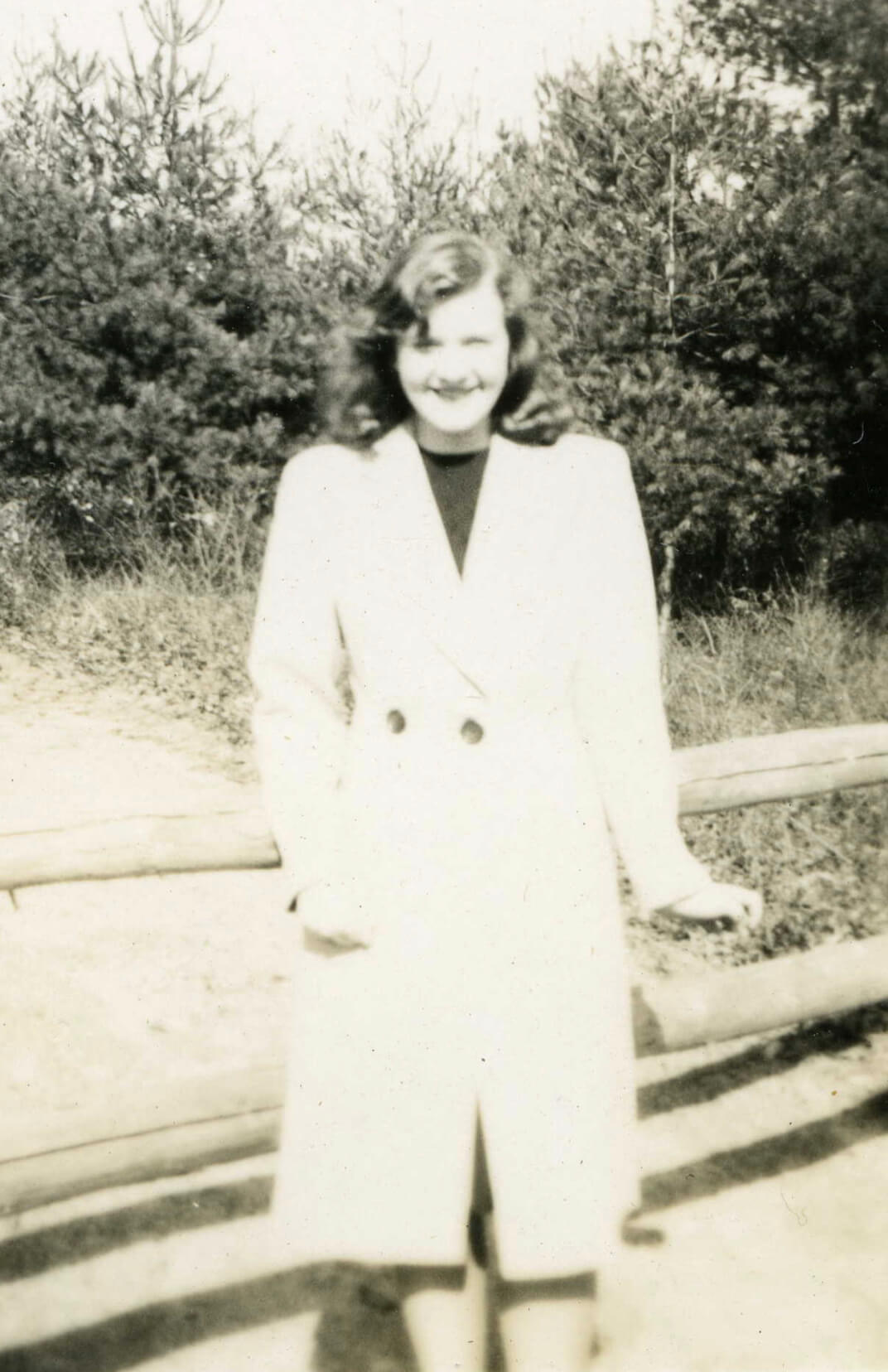
Irving's Affirmations

My father Irving, Mr. Wonderful, was the most enthusiastic, fun, outgoing person I have ever known, but he had a private side, too, and occasional bouts with anxiety. People were ashamed to openly talk about their mental health back then, but Irving was much more self-aware – and self-conscious – than we, his children, ever realized, especially not during our wild, wonderful childhoods.

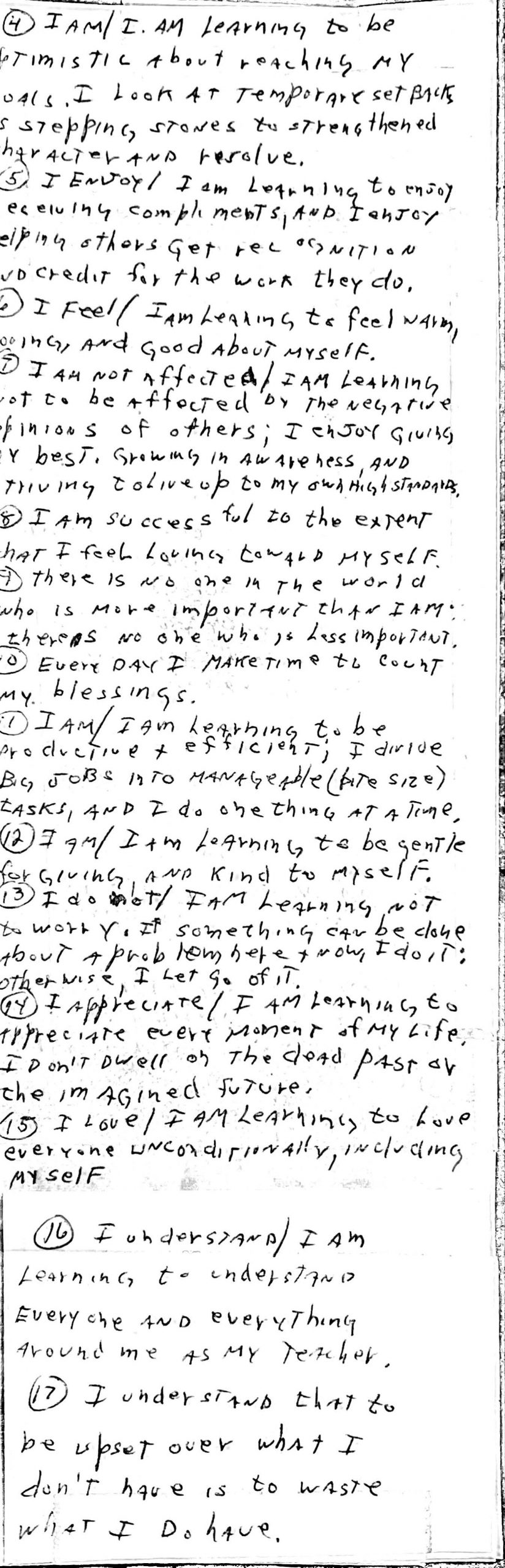
We now know that Irving actively tried to calm his thoughts and feelings by memorizing and mentally reciting positive affirmations, 17 of which we have a copy of, written in his own hand, transcribed into text below for easier reading.

I saw affirmation #6 in action one day when we were on an overnight visit with my then two-year-old daughter Jessica (the first Cross grandchild) to Grammy and Grandpa’s house in Swansea. Grandpa Irving carefully helped little Jessica get up onto a step ladder in front of the bathroom sink to brush her teeth, and as she looked at herself in the mirror, she innocently said, as if speaking to someone else, "I love you, Jessica."

Grandpa, looking in the mirror, smiled tenderly at Jessica and then at himself as he said, "And I love you, Irving."


Positive Self-Talk

Your mind creates your stress. As you think, so you become!

The extent to which we love and respect ourselves has a lot to do with how well we relate to the world around us and, consequently, with how much “stress” there is in our lives.

Following is a list of affirmations for building self-esteem. The way to use aspirations is to repeat them to yourself so frequently that you start believing them and living with them.

Consider taping this list to your bathroom mirror and reading it once through before work or taping it over your desk so its handy all day. Or you can take the affirmation each day, memorize it, and repeat it to yourself during spare moments – so it really sinks in.

Taking Charge Affirmations for Building Self-Esteem

1. I am a valuable and unique individual, and I am worthy of the respect of others.

2. I look / I am learning to look at life optimistically and I am eager to accept new challenges.

 3. I am / I am learning to be kind, truthful, patient, and compassionate.

4. I am / I am learning to be optimistic about reaching my goals. I look at temporary setbacks as steppingstones to strengthened character and resolve.

5. I enjoy / I am learning to enjoy receiving compliments, and I enjoy helping others get recognition and credit for the work they do.

6. I feel / I am learning to feel warm, loving, and good about myself.

7. I am not affected / I am learning not to be affected by the negative opinion of others; I enjoy giving my best, growing in awareness, and striving to live up to my own high standards.

8. I am successful to the extent that I feel loving toward myself.

9. There is no one in the world who is more important than I am; there is no one that is less important.

10. Every day I make time to count my blessings.

11. I am / I am learning to be productive and efficient; I divide big jobs to be manageable (bite size) tasks and I do one thing at a time.

12. I am / I am learning to be gentle, forgiving and kind to myself.

13. I do not / I am learning not to worry. If something can be done about a problem here and now, I do it: otherwise, I let it go.

14. I appreciate / I am learning to appreciate every moment of my life. I don’t dwell on the dead past or the imagined future.

15. I love / I am learning to love everyone unconditionally, including myself.

16. I understand / I am learning to understand everyone and everything around me as my teacher.

17. I understand that to be upset over what I don’t have is to waste what I do have.

Marooned Motorcycle Rescue

STORY #17

Irving was a kind and helpful person by nature, and during the hitchhiking craze of the 1960s–70s, he gave many different folks a lift. The most memorable and oft-told instance occurred in the summer of 1966.

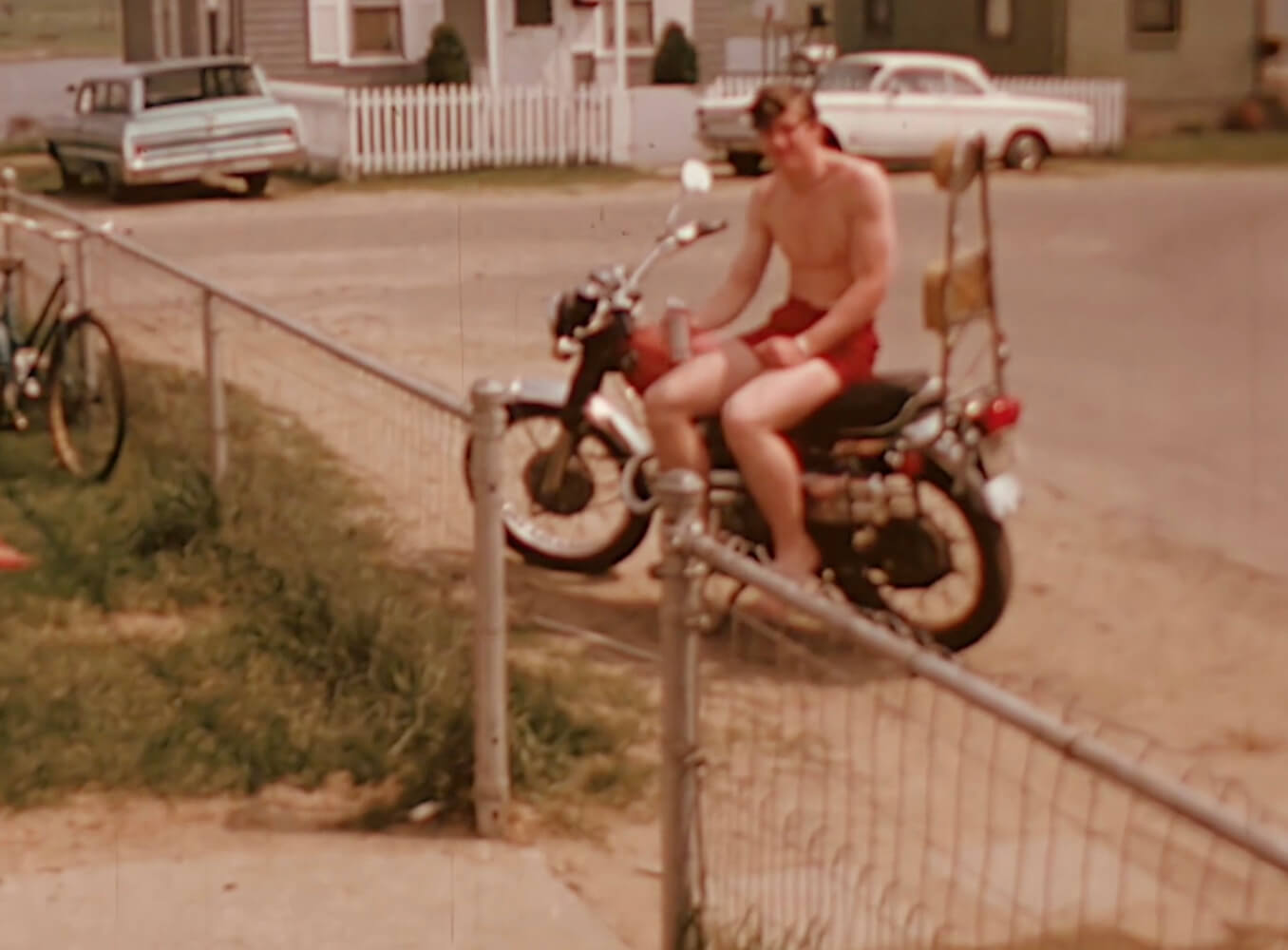
It was early on a Friday evening and Irving was driving home from work at the New England power plant, when he spotted a young couple by the side of the road looking utterly bereft next to a motorcycle – and this was way before the age of cellphones, so they were really in trouble. They looked like real, live rough-and-tumble bikers, and anyone else would keep driving by, either too intimidated or just unwilling to assist.

Naturally, Irving stopped to help them, and concluded that their engine was kaput. They were near the Somerset Creamery, about ten minutes away from our house, so Irving told them to wait while he went home to switch cars. He asked our brother Steve (who was 16 at the time) to go back with him to help, and they loaded the defunct motorcycle into the big car and brought the couple back to our home in Swansea.

That’s when Irving learned that the couple were newlyweds traveling from New Jersey to Cape Cod for a honeymoon weekend. Irving believed them and their story and did what any normal person would NEVER do – he lent them our car so they could go.

It was clear that the motorcycle’s oil crankcase was cracked and gone and that they had blown the engine. So, when they asked Irving for a ride to the bus station, he looked at their sad faces and said, “Oh, just take our car,” and handed them the keys.

Overjoyed, the young man and woman thanked him profusely, tossed their backpacks in the trunk, and drove off. Watching them turn the corner and drive out of sight, Steve asked, “Dad, do you even know their last name?”

Dad reassured him, “Don’t worry; they’ll be back.”

When Alzada returned to find the car gone, all she could do in response to Dad’s story was mutter “Oh, Irving!”

But, sure enough, on Sunday evening, the couple pulled up to the house in our car, tired and happy – and with a full tank of gas. Alzada invited them in and they shared Sunday dinner with our family, during which our dog grabbed the meat right off the table, and they stayed with us that night, sleeping in a tent in our backyard.

For many years afterward they sent our family a Christmas card of thanks.

Don't Tell Your Mother

Irving was the ringleader of all the fun things we did together as a family — the camping trips, the road trips, the track meets, and the crazy driving around on wheeled thingamabobs in parking lots – and Alzada was always right there with us, our biggest cheerleader – most of the time.

Irving could be eccentric in his ideas of having fun, nearing the edge of downright dangerous by today’s standards, but Alzada would be right by his side, exclaiming, “Oh, Irving!”

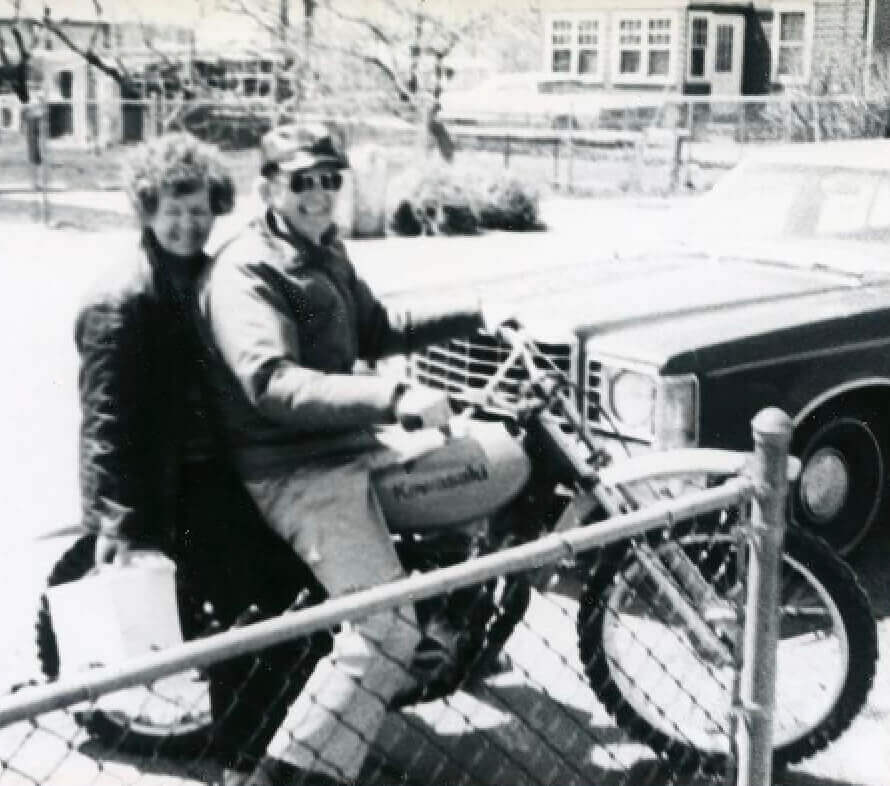
When he had the idea to put chains on his motorcycle tires to pull us around on snow skis, Alzada objected at first, as she often did (Oh, Irving!), and then complied by getting on the back to hold the tow rope.

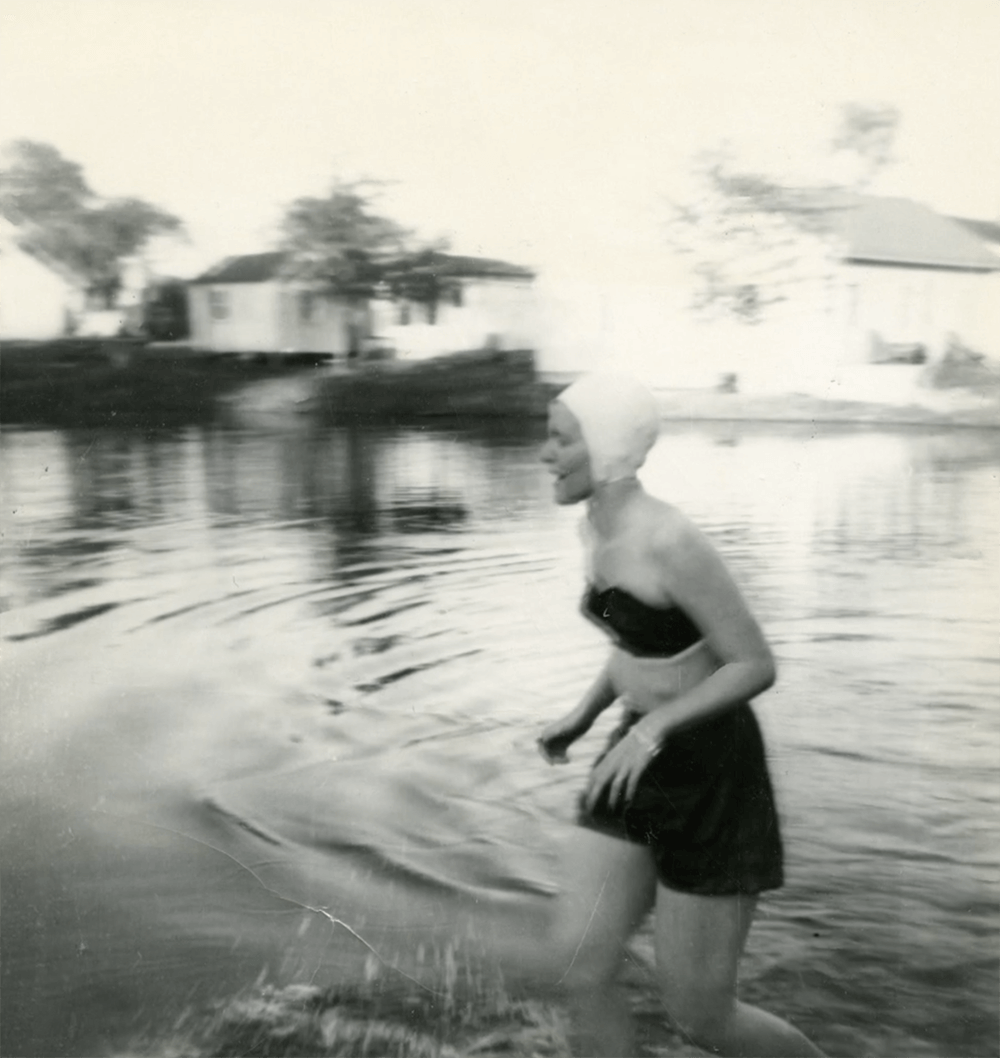
Once, when my dad invited me for what may have been a multi-mile swim at the Swansea Dam, my mother wondered if it would be too much for me but, in I went, and I can recall feeling totally safe being near Dad, who had me relax and float when I got tired, caring for me and encouraging me all the way.

Irving also made the best babysitter because he let us do absolutely anything we wanted. One night, Alzada came home and slipped on the kitchen floor that we Cross kids had decided to “wax” with butter. My father just sat there, casually reading the paper, which he enjoyed, as if nothing were amiss – or at the very least, as if he were pretending not to notice anything was amiss. He liked telling my mother, “I never have any problem with these kids!”

Clearly, Irving’s sense of fun included mischief.

“Don’t tell your mother,” Irving would advise when we had done something that wouldn’t meet Alzada’s approval – like when Brian, age ten, flipped over a go-kart, scraped his head, and broke his glasses. Then there was the time that Dad took me out on a sailboat in the middle of Lake Sebago, which felt like the ocean to me.

And there were so many other escapades, but we were always thrilled with the adventures and would NEVER tell our mother. Of course, we could probably guess how she’d react – “Oh, Irving!”

Track Meets

Irving would enter us Cross kids into track meets, even though we had no formal training whatsoever. What we did have in abundance was love and encouragement from both of our parents — and the chance to shine. Irving thought we would run fast and do fine out on the field, and so we did.

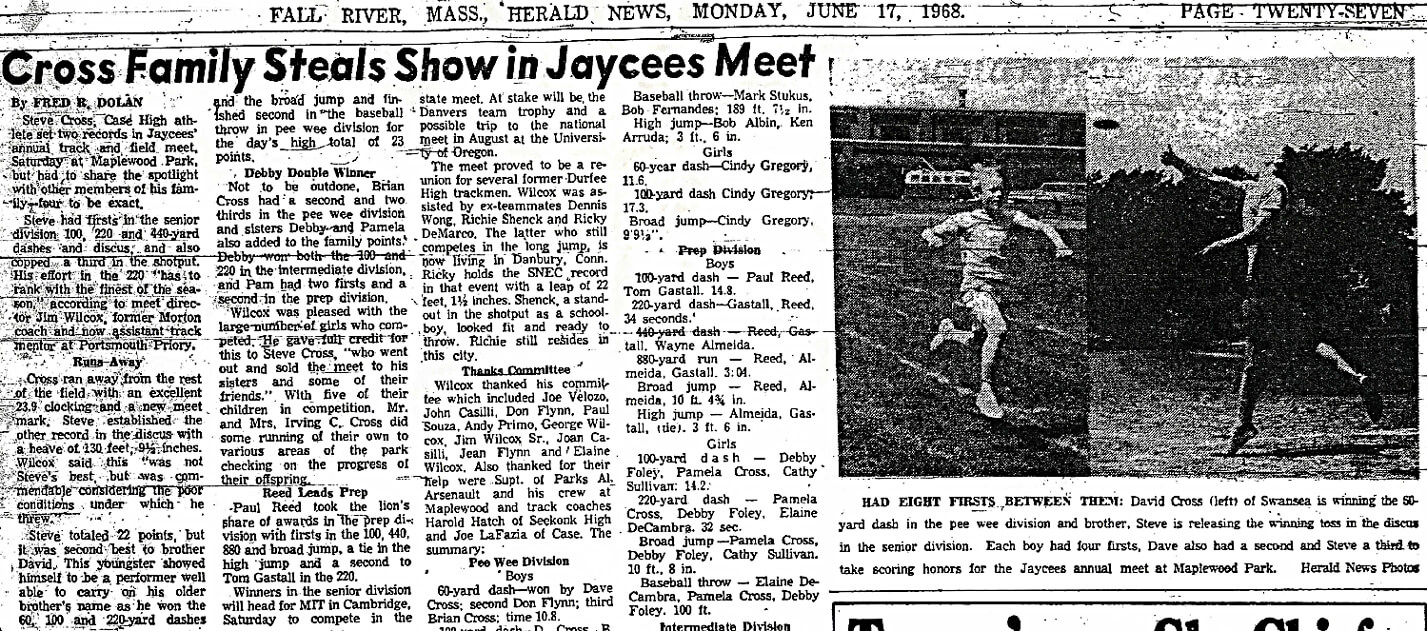
One of these track meets was triumphant for our family. On Saturday, June 15, 1968, Irving entered five of us in the Jaycees’ annual track-and-field meet at Maplewood Park in Fall River – everyone except Dana, who was too young at age six.

ALL FIVE OF US WON MEDALS!

Our family’s combined victories earned us an article in the Fall River Herald News on June 17, 1968 – “Cross Family Steals Show in Jaycees Meet,” read the headline.

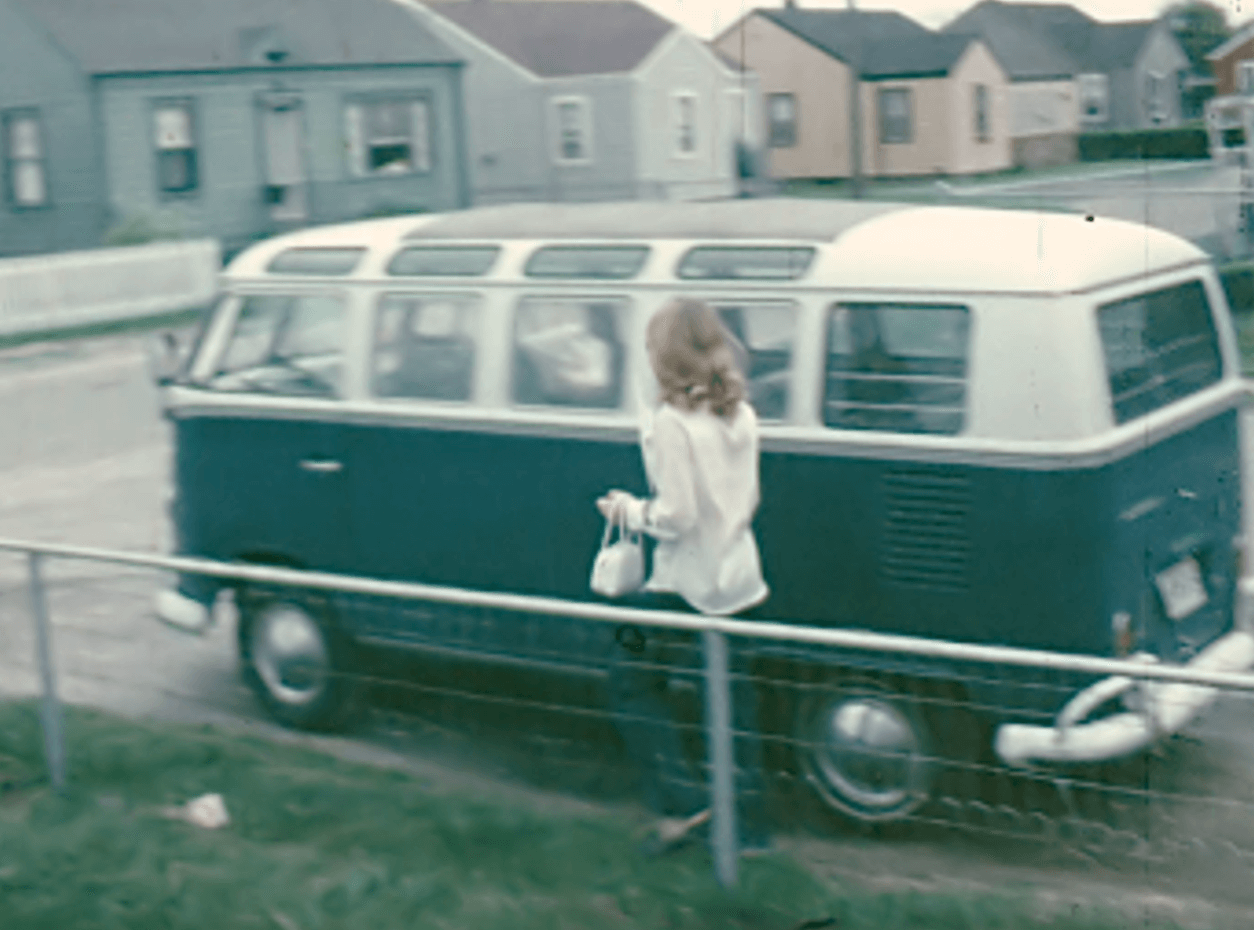
Reporter Fred Dolan wrote that our oldest brother, Steve, broke records in both the 220-yard dash and the discus throw, two of the five events in which he competed. For all of the details, see the full article below (our trusty Volkswagen bus appears in the background of the newspaper photo).

Our brother David won three foot races AND the broad jump AND took second in the baseball throw, scoring the highest overall point total of any athlete who competed on that day.

AND that was not all – Brian won one second-place medal and two third-place medals; Pam won two firsts and one second in the prep division; and I, Deborah (“Debby”), came in first in both the 100-yard and 220-yard dashes in the intermediate division.

Mr. Dolan also gave our parents their share of spotlight – "Mr. and Mrs. Irving C. Cross did some running of their own to various areas of the park checking on the progress of their offspring."

Rope Tows & Rapids

Alzada was a reluctant but almost always willing victim. Consider the first – and LAST – time my mother attempted to ski.

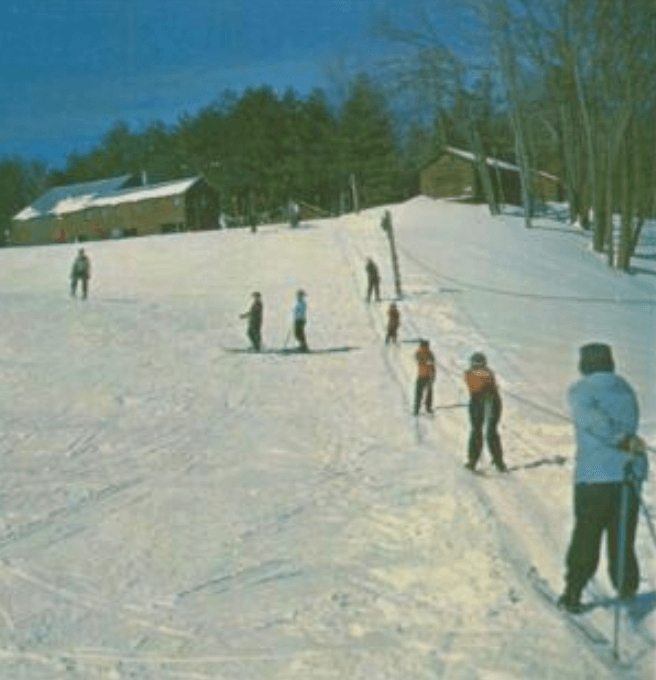
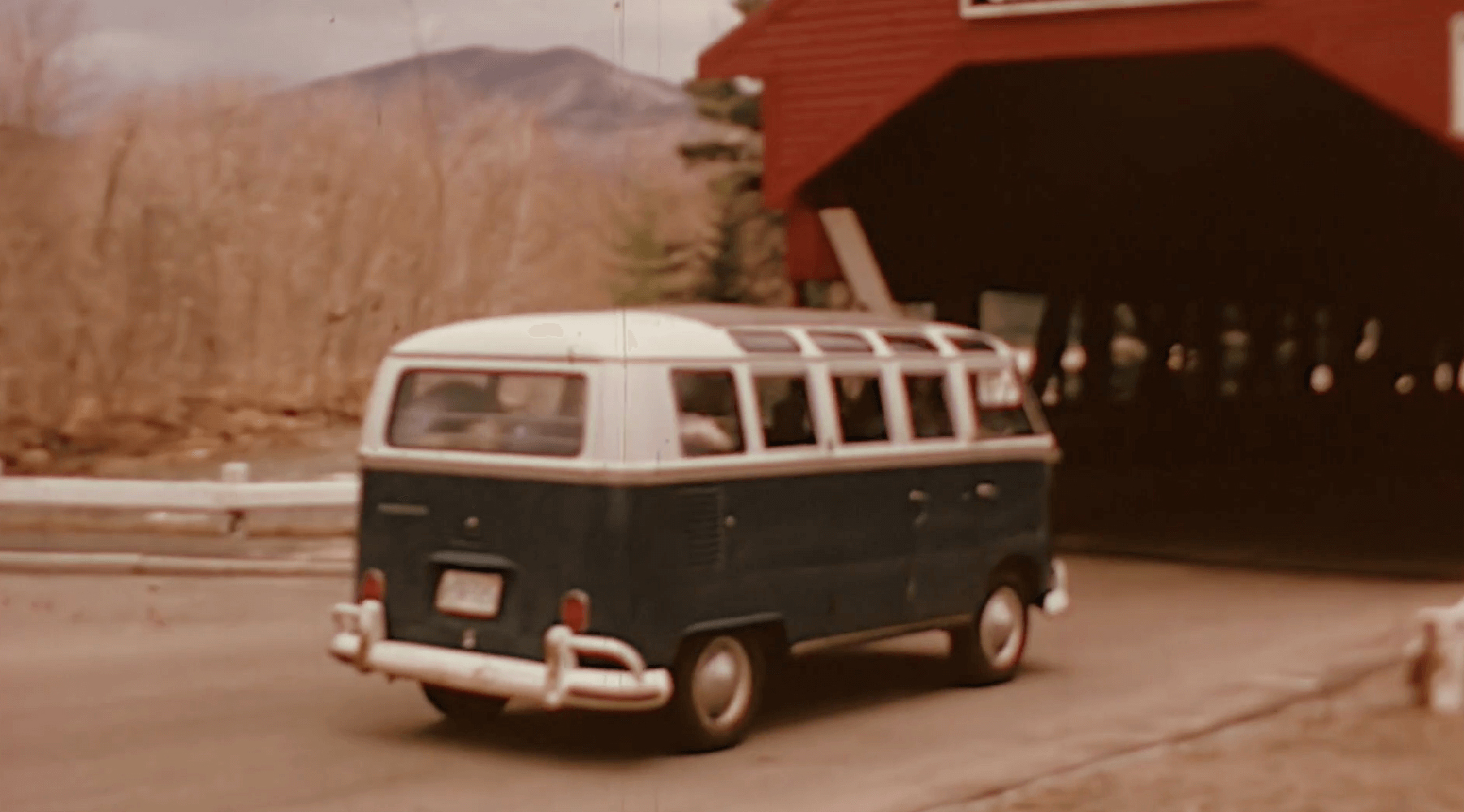
Mom had a knack for finding affordable places we could all go to in our Volkswagen Bus, including King Pine, a family-friendly ski house in Madison, NH. The cost for skiing was $4 a day in the 1960s, and the lodging rates and all-you-can-eat meals (a must with growing boys in the family) were quite reasonable. I still remember Steve eating enough bacon for a battalion every morning.

Dad and the kids were quite adept at ascending by the chairlift, but beginners would start on the "rope tow," a free, crude system of a looped rope powered by a motor. You grasp the rope to haul you up the slope.

All of us urged mom to give it a try – "C’mon mom, just try it,” was the family refrain.  

And she did.

Mom grabbed the rope tow tight, fighting the momentum, she was getting there…

And then, halfway up, her skis crossed and she ended up on her back with her arms and legs splayed at her sides, as if she were going to make a snow angel. Skiers behind her joined the fray.

And mom just couldn't get up.

I’d like to think I’m better than this, but at that moment, all I could do was laugh! (It still makes me laugh!) I tried to suppress it, but it was just so, so funny.

Mom didn't think so, and never skied again.

Years later, when us Cross kids were adults, we all went together on a whitewater rafting trip in Colorado. Mom, on the back of the raft, was totally unprepared for what was going to happen.

As soon as we hit the first rapids – out of the raft she tumbled, taking the guy sitting next to her along with her.

She had to drift down current in her lifejacket for at least a mile before she could swim to shore, boiling mad that not one of us, not even our father, had jumped out to help her (which would have been impossible at our breakneck speed).

Needless to say, mom also gave up whitewater rafting.


Motor-Sledding Alzada

Small Houses, Big Families

Though she didn’t know it at the time, Alzada’s adolescence prepared her for her future role as the mother of a big family in a small house.

When Alzada was growing up there were only two beds in their small Fall River home at 733 New Boston Road – one bed her older brothers shared, and the other she shared with her parents.

Alzada’s father Louis passed away in 1944 when Alzada was 17, and soon after, Alzada’s brother Frank married her best friend Betty and moved back into the Weaver family home, where they had two daughters, Susan Irene and Cynthia Ann, by the end of 1950. Alzada’s brother Joe also moved in with his wife Johanna and their little daughter Joan in the late 1940s, and their son Robert was born while they lived there.

This was not a big house, so the living room was converted into a bedroom for Frank and Betty; Joe and Johanna took one of the bedrooms; and Alzada, who never slept alone, continued sharing the other bedroom with her mother Susan. Joe and his family lived there until Frank officially bought the Weaver home in the early 1950s.

Three days before their wedding in February 1950, Alzada and Irving rented an apartment on the third floor of a house on Durfee Street. There were times early in their marriage when they would put two weeks’ rent down on an apartment with no idea where they’d get the next two weeks’ rent, but Alzada and Irving never felt deprived because there was so much joy in their house from the beginning, so much activity and laughter.

Alzada was pregnant and quickly grew tired of climbing three flights of stairs, so they moved in with Irving’s parents, where their very first child, Steven Thomas Cross, was born in October 1950.

Irving, an electrician by trade, had to go where the work was, so their small but growing family moved around a lot in the beginning. He was on a job in Connecticut when their second child – me – Deborah Ann Cross – was born in January of 1952. We moved in with Alzada’s mother, Susan, our Nana, while Irving found us a place to live in Connecticut, and almost as soon as the job ended and we’d moved back to Fall River, Irving found his next job – in New Jersey.

“And I moved to New Jersey with the two babies!” Alzada said. “I felt like, where he goes, I go. Wherever his work takes him, then that’s where I’ll be.”

Alzada and Irving’s third child, Pamela Jean Cross, was born in July 1954, and their fourth, David Alan Cross, in October 1958.

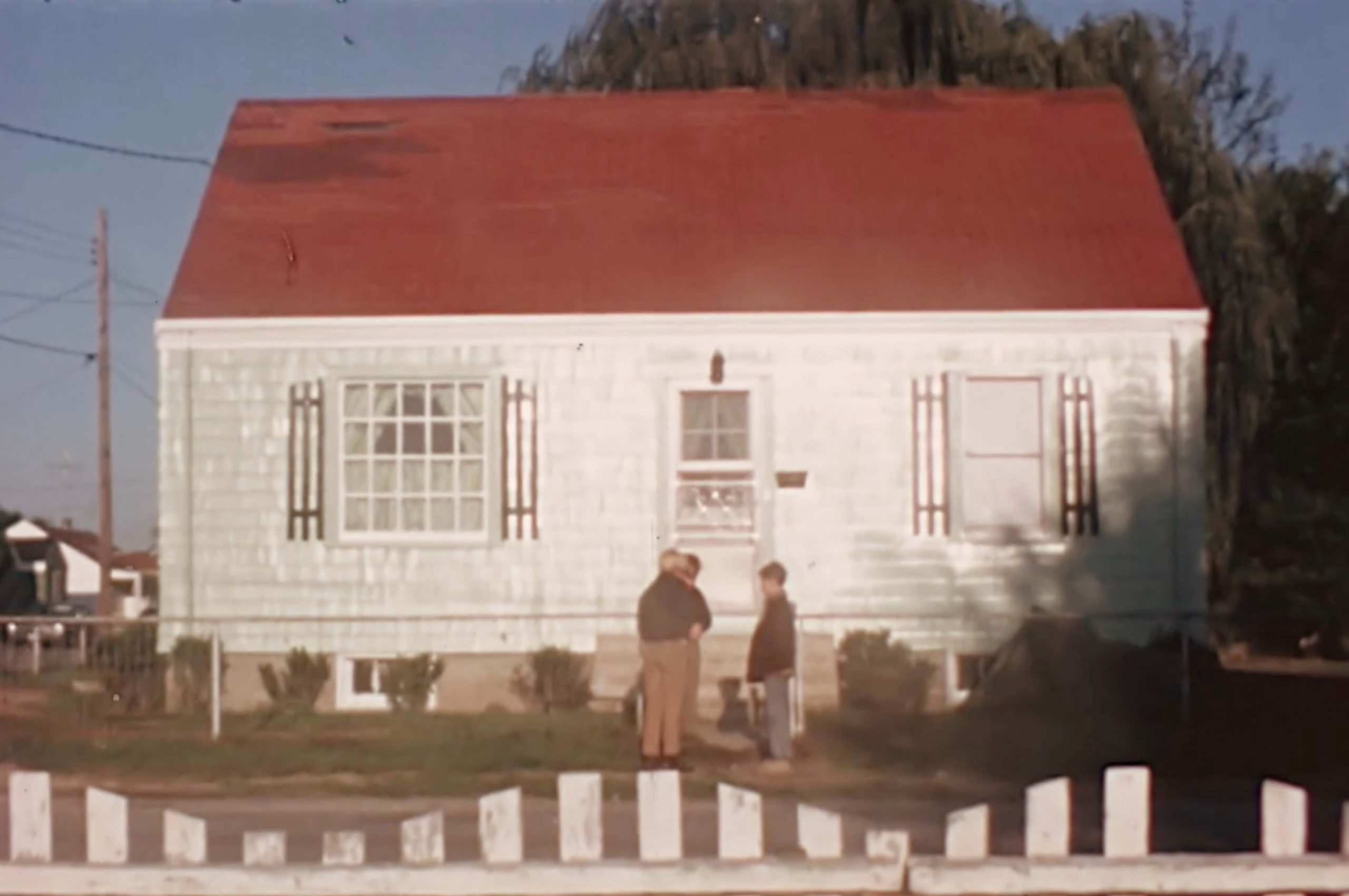
When David was one, Irving and Alzada purchased what would become the Cross Family “forever home” on Little Neck Island in Swansea, Massachusetts. Their fifth child, Brian Jay Cross, arrived in 1960, followed by their sixth and last child, Dana Bradford Cross, in October 1962.

“We had six kids and only one bathroom! I never pushed Irving that we needed a bigger house. We stayed in the house that we could afford,” Alzada said. “It’s a small house, but to us, it didn’t feel small.”

Alzada still lives in the Cross Family home.

Wedding Surprise

Once, when asked how Irving popped the question, Alzada (laughing) said, “I’m not sure he asked me – I think it just…happened.”

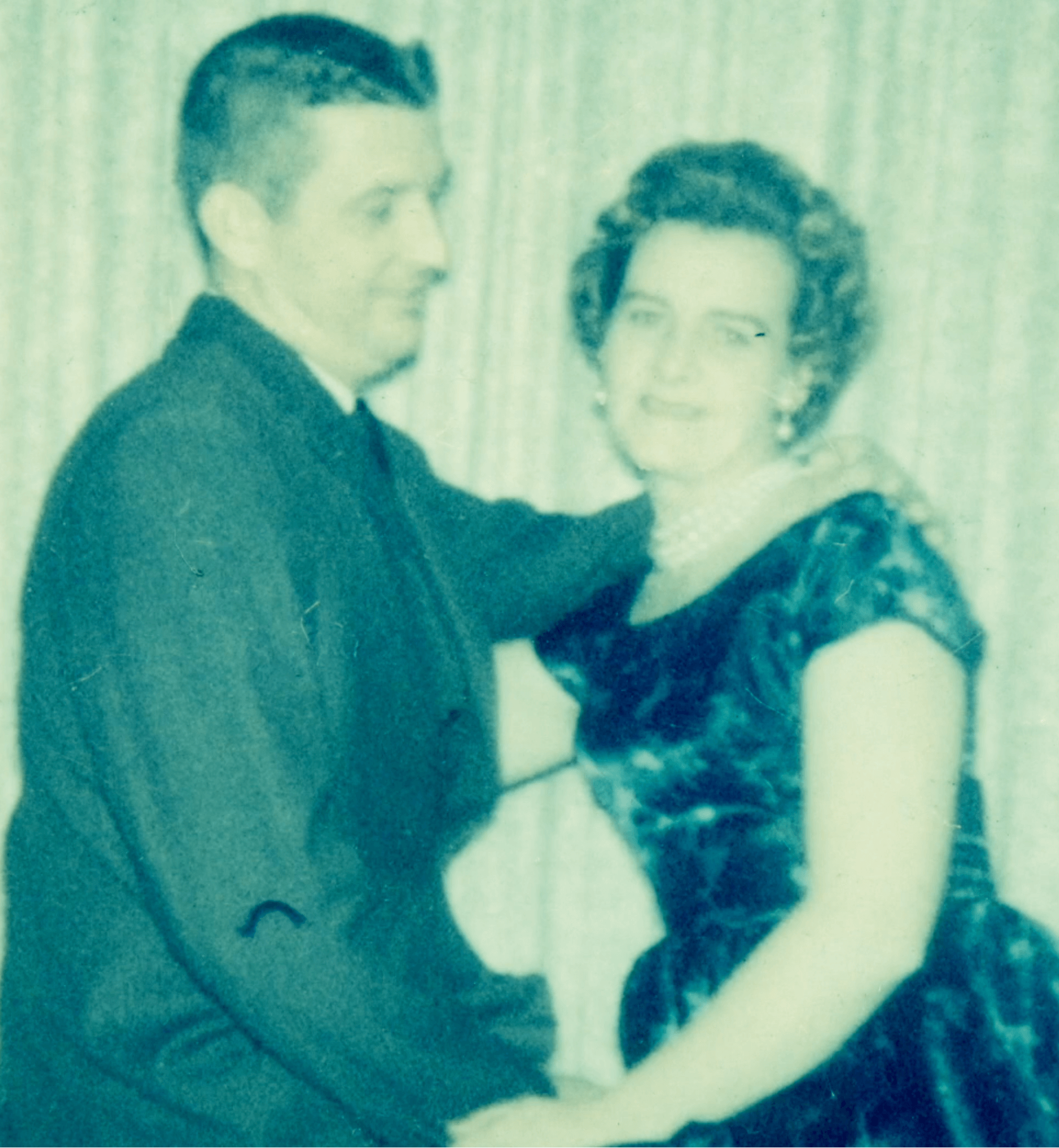
Irving and Alzada became Mr. and Mrs. Cross on Friday, February 17, 1950. It was a freezing cold day, but the temperature doesn’t matter when you’re so much in love, and you don’t need fancy proposals and expensive frills to get married.

Their small, simple wedding ceremony was held in the modest church parlor of the parish house. Alzada’s brother Frank was Irving’s best man, and Frank’s wife Betty (Alzada’s best friend and sister-in-law) was her matron of honor.

Within seconds of being officially pronounced man and wife, still standing hand in hand at the altar, Alzada’s overwhelming happiness vanished in a cloud of confusion and disbelief as Irving was wrenched away from her.

“It felt like there were people pulling our hands apart. Who would do such a thing to a newly married couple?” Alzada recalled. “And then I looked, and it was Irving – he had passed out!”

He was just about to fall on the floor when Frank, who was 5’2 – a whole foot shorter than 6’2 Irving – caught him. (Best man, indeed!)

The little wedding party got the woozy newlywed into a chair, and as he came to, Irving said, “OK, finish it.”

When they told him he was already married, he looked at his hand, saw the ring and, very calmly, simply said, “Oh.”

From swooning to honeymooning!

NOTABLE NUPTIALS

Sir David Attenborough, who was born in May of 1926, just five months before Alzada, also got married on February 17, 1950. He and his wife Jane Elizabeth Ebsworth Oriel were married until her passing in 1997. Other notable nuptials for February 17th include Teddy Roosevelt's daughter Alice (1906), novelist J.D. Salinger (1955), and actress Joan Collins (2002).

Alzada + Irving

Alzada and Irving were attracted to each other at first sight.

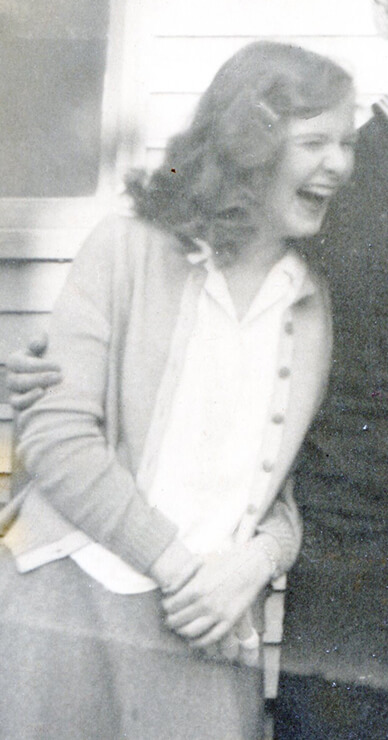
It was 1949 and Alzada, age 23, was working the soda fountain at the corner drugstore in Fall River. From behind the counter, she could watch everyone who came into the store, and one day, a very attractive young man caught her eye.

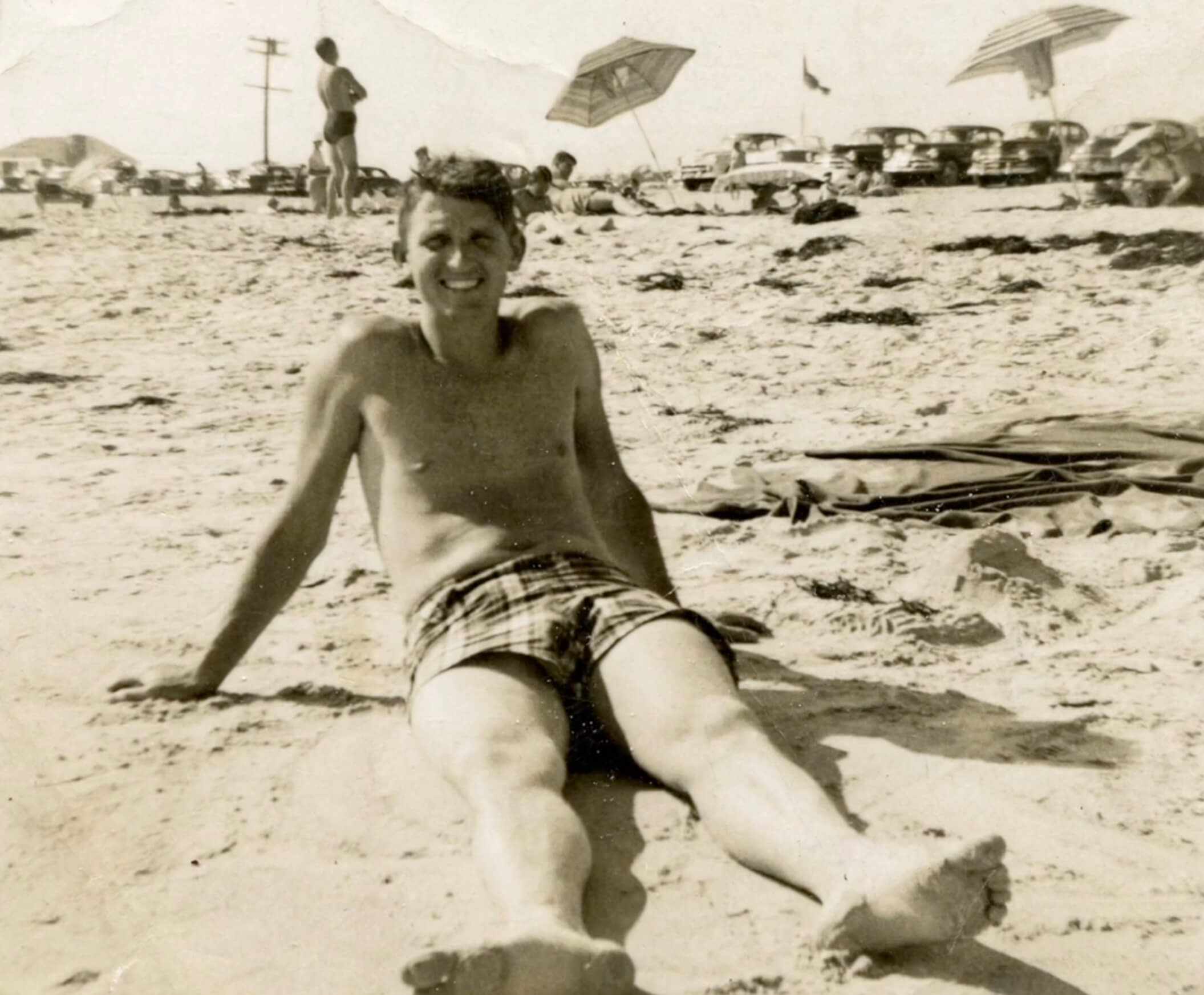
He was tall, slim, and elegant-looking, and Alzada noticed right away that he had an appealing kind of hip action while playing pinball with his friends. Pinball gave him an appetite, and the pretty girl behind the counter – a classic beauty with an easy smile – was even sweeter than the sodas she served.

Alzada, instantly smitten, always gave him a little extra ice cream each time he came in, embellishing the recipe, concocting extra-special sodas just for him – pretending not to hear when he bragged to his friends that the fountain girl gave him drinks for free. (Alzada was paying for his ice cream sodas!)

The handsome fella with the sweet tooth and swiveling hips was one Irving Cecil Cross, and he had a lot going for him: he was the youngest licensed electrician in town at age 22, and doing well by the looks of his brand new bright yellow 1949 Jeep Roadster.

Boy, is that something, Alzada said to herself.

But there was something more than just his good looks, sharp wit, and magnetic personality, and Alzada recognized it very early in their blossoming relationship; it was the essence of Irving’s generous and genuine spirit. If a friend needed money, Irving would lend it to him. He would even let friends borrow his precious car.

Irving picked up Alzada in his newly shined canary colored Jeepster for their first date. He wore a stylish, well-made suit and showcased his impeccable manners at the fancy restaurant he took her to. Their first date became the happiest day of both their lives at that point, with happier days yet to come.

She soon found out that the snappy suit was rented, and the Jeepster was repossessed soon after that, so Irving had to settle for a broken-down Ford truck and ten-cent beers when planning their dates. Expensive restaurants were no longer within their reach, but they never had been!

And none of that mattered. Alzada had fallen in love with a man who valued people more than possessions. She was always proud to be seen with Irving. He was the man she had always imagined falling in love with and she was the girl he’d always been looking for. They were made for each other.

It’s an enduring love story that gave rise to more love through their children, grandchildren, and great-grandchildren, and will continue through the generations yet to come.

Irving truly swept Alzada off her feet, and she never landed back on earth.

And they really, truly lived happily ever after.

Irving's Report Card

We know so little about Irving’s childhood, compared to Alzada’s, and I'm so sorry that I wasn't more curious while he was with us. I think, in part, Irving never talked about his childhood because he didn’t grow up in a happy home.

We don't have a single existing photo of Irving before he was driving a car – no happy baby pictures, no adorably awkward school photos, no Christmas postcards with his sisters, Irene and Joan, or their parents.

Irving's father, John Cecil Cross (known as Cecil), was a crafty electrician, once described by Alzada with just one word – “mean.” But I feel compelled to give my grandfather Cecil a pass, because his childhood wasn’t very happy either. Cecil was just a toddler in 1902 when his mother, Angelina, sailed with him and his five siblings across the Atlantic from Lancashire, England to join her husband, Cecil’s father Thomas Cross, in Boston. Angelina died just one year later, leaving little Cecil motherless.

By contrast, Irving was the kindest person I have ever known and, luckily for everybody who was privileged to know him, his personality was nothing like his father’s. Indeed, the only commonality was their craft at inventing and fixing things, and their careers as electricians.

Cecil forced Irving to quit school at age 15 and sent him to live with a family friend and work at the Naval Torpedo Station on Goat Island in Newport, RI, where materials for the Navy, such as torpedoes and torpedo equipment, were developed and built.

While we don't have photos of young Irving, we're lucky to have a copy of his ninth-grade report card from Henry Ford Junior High School, which he attended from 1941 to 1942 before his father made him drop out.

Note the “A's” for personal appearance, courtesy, and cooperation, and his very high marks in math and science. Also note the “C” in self-control – he was always the one to have fun, even then!

When Irving reached 18, the legal age to serve, he enlisted in the United States Army, signing papers in Boston on December 13, 1945 and serving until April 1947. He also became a licensed electrician when he was 18, and worked with his father for a while

Of course, in 1949, Irving met Alzada, and the rest is history.

Utterly unlike his own father, Irving grew up to be a loving husband and the adoring father of children who stayed, and brought their friends, and always came home to be with him and bask in his unconditional love.